Biodiversity
We started work on the Biodiversity Flag in September 2019. A Green Schools Committee was set up. An Environmental Review was conducted and an Action Plan was put into place. We signed up for the Investigate Forests Workshop and had a visit from Clare Patten. The junior classes were competing in the Great Plant and Animal Hunt. However, in March 2020 there were school closures nationally due to the COVID pandemic and the school remained shut till the end of the school year.
It was decided by the Green Schools Co-ordinator, Mrs Duffy, to restart the first year of the Biodiversity flag, so in September 2020 the same Green Schools Committee continued with the work of the previous year. However, due to the changes in schooling and keeping pupils in pods many of our Green Schools initiatives were once again put on hold. There was a further school closure between January - March 2021. Overall the first three steps of the Biodiversity programme were done in the first year. For the second year on the Biodiversity programme, Ms Kerley (2nd class) and Ms Magill (6th class) joined the Green School Committee and a renewed effort was made to continue with the Biodiversity flag.
The Green School Committee
Our Green School Committee for the year September 2021 – June 2022 has been set up. To be on the committee interested pupils in each classroom had to be able to answer the following 3 questions:
- How many flags does the school currently have? Can you name them? (4 flags: Litter & Waste, Energy, Water & Travel)
- What flag are we currently aiming to achieve? (Biodiversity)
- Name any of the 3 teachers involved in the Green Schools Programme? (Mrs Duffy, Ms Kerley & Ms Magill)
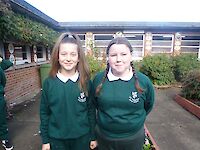
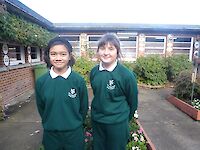
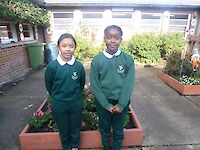
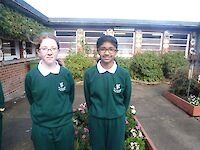
All pupils that answered the above questions correctly were put into a draw and 2 members from each class were chosen. Here are the new Green School Committee members:
2nd Class | Ms Kerley | Cara Staunton & Aoife Byrne |
Ms McKeown | Ava Sexton & Zara Carolan | |
3rd Class | Ms G. Galligan | Aoife Doran & Ruby Moran |
4th Class | Mrs McNally | Princess Alo & Brooke Ndlovu |
Mrs Murphy | Megan Gonnelly & Chloe Hoey | |
Mrs McManus | Emilia Duffy and Grace Mc Gorman | |
5th Class | Ms L. Galligan | Gianna Grantusa & Ellen Chernenko |
Mrs Greene | Keeva Daly & Sophia McMenamy | |
6th Class | Ms Duffy | Naomi Prasad & Gia Flynn |
Ms Magill | Olivia Kissane & Kaliyah Fisher |
Green-Schools Co-ordinator: Mrs Duffy
Green-Schools Teachers: Ms Magill & Ms Kerley
Committee members are expected to keep their own classroom green by switching off the lights, reminding teachers to switch off whiteboards at break times or when not in use, to monitor litter, to inform fellow classmates and the school about ‘Green’ events, to help the Green School staff with announcements and competitions and to record and encourage classmates to use sustainable transport to school.
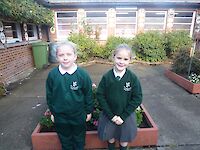
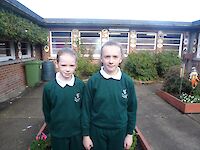
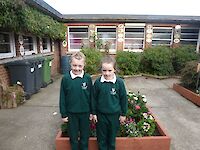
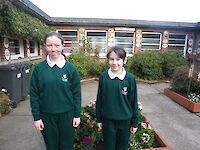
Our Green School Committee out in the school garden:
Environmental Review (conducted in Year 1)
The aim of the review is to identify the initial situation within the school regarding biodiversity.
There are three essential actions to carry out as part of the review process:
- Biodiversity Awareness Survey
- Compile a Habitat Map
- Revisit previous themes and show the links to the Biodiversity theme
Biodiversity Awareness Survey
A survey of some general questions relating to biodiversity was conducted on all pupils from 2nd to 6th class in November 2020. This is the survey that each pupil was asked to complete:
QUESTIONS | ANSWER | |
Q1. | What does biodiversity* mean?
|
|
Q2. | Give 3 reasons* why biodiversity is so important?
| |
Q3. | Give 3 threats* to biodiversity?
| |
Q4. | List 3 ways* in which we can help biodiversity:
| |
*Sample correct answers
Q1. All living things/ Plants and Animals/ nature/ wildlife etc.
Q2. Provides services to us, e.g. helps provide food/is our food, stops flooding, gives us oxygen, regulates climate, gives us green space good for exercise/mental health, we can make furniture/houses/tools etc.
Q3. Threats include habitat loss/destruction/fragmentation, climate change, litter, pollution, pesticides, over-exploitation/over-fishing etc.
Q4. Ways to help, include: growing flowering plants for bees/pollinators, erecting bird boxes, bird feeders, bat boxes, bug hotels, hedgehog hibernacula, leaf piles, compost heaps, plant trees, plant wildflower areas, letting areas grow wild, installing a pond etc.
In total 214 pupils from all classes from 2nd to 6th were surveyed. The results showed:
RESULTS | % |
What % of pupils know what biodiversity is: | 26% |
What % of pupils can give at least one reason why biodiversity is so important: | 31% |
What % of pupils can give at least one threat to biodiversity: | 50% |
What % of pupils can list one way in which we can help biodiversity: | 32% |
The same survey was conducted in Year 2 of the programme on the 16th March 2022 to establish whether levels of awareness has increased.
In total 177 pupils from all classes from 2nd to 6th were surveyed. The results showed:
RESULTS | % |
What % of pupils know what biodiversity is: | 75% |
What % of pupils can give at least one reason why biodiversity is so important: | 75% |
What % of pupils can give at least one threat to biodiversity: | 90% |
What % of pupils can list one way in which we can help biodiversity: | 81% |
The results show that as a result of our work on the Biodiversity flag the knowledge of the pupils in our school about biodiversity has greatly increased. We hope to continue this awareness in future years.
Compile a Habitat Map
A Habitat Map shows the geographic distribution of different habitats within a particular area. In order to protect and enhance biodiversity in our school we had to find out what biodiversity existed already.
Ms Magill’s 6th class were in charge of drawing out our Habitat Map. Here is the map for our first year of the Biodiversity flag:
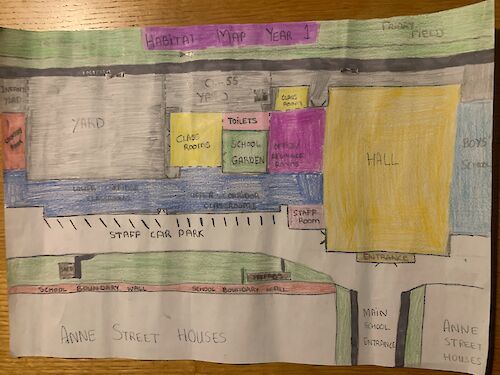
Areas that were identified in the map for potential of increased biodiversity are:
1. Planting daffodil bulbs along the main school entrance
2. Planting flowerpots and hanging baskets in the spring / summer season yearly and putting outside new school building classrooms, the staff entrance and main school entrance
3. Creating a flower bed near the outside prefab and a wildflower patch near the school shed
4. Planting window boxes with spring bulbs in the school garden area
5. Planting vegetable seeds in the school garden area and by some classes as part of their SESE curriculum
6. Hang bird feeders in the school garden area and on trees along the main school entrance
7. Creating a bug hotel to increase the number of minibeasts to the school
Here is the Year 2 Habitat Map with new areas of biodiversity included:
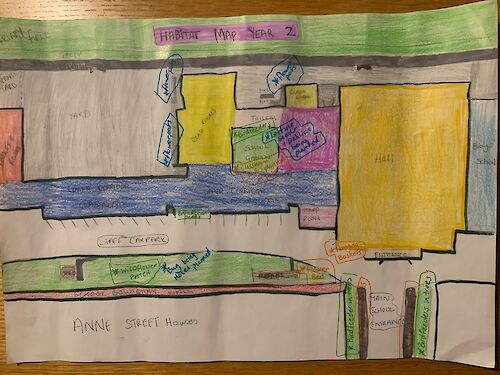
We also found out how our garden grows by finding out the following information:
Green Areas | |
|
|
|
|
|
|
Also X classes conducted a species survey and found the following species at our school:
Species Survey
Write down a list of the different species that are spotted in our school | |
Birds | Robin and crows |
Trees | Apple Blossoms, Cherry Blossoms, Holly |
Mini-beasts | Spiders, wasps, ants, worms |
Flowers | Lavender, Daisies, Clementis, Primroses, |
It was decided by the Green Schools Committee to increase the number of birds to our school by putting up bird feeders, to plant more trees in the surrounding area, to plant bulbs for each class to look after and to put in a bug hotel in the school garden to increase the number of mini-beasts. We also wanted to increase the number of bees and butterflies coming to our school so plants that were great pollinators will be planted in the springtime.
Direct and indirect links with the other Green-Schools themes:
Litter & Waste: In previous years we have cut down the amount of litter in our school yard by prohibiting pupils from eating in the yard during break times. Instead all pupils eat and drink in the classroom before or after their turn in the yard. However, litter patrols rotated between classes will be set up in November to ensure that the yard is litter free. Once a week these litter patrols will make sure litter and waste is at a minimum at the front and back of the school grounds. Keeping our school grounds litter free will have a positive impact on biodiversity. The school will also take part in the Spring Clean Up outside the school grounds in April of each year.
Energy: In previous school years we used an Energy Squad to make sure that all classes were turning off their lights when leaving the classroom and ensuring that teachers were switching off whiteboards and laptops when not in use. The Energy Squad will be re-established each year to ensure that these good practices are continuing. By reducing our energy usage this will lead to an overall reduction of the burning of fossil fuels which is often linked to habitat loss, such as peatlands and may also lead to reduced CO2 emissions.
Water: In previous school years we put basins in each classroom so that excess water could be used for watering plants. This good practice will be continued.
Travel: We actively encourage the promotion of sustainable travel to school by organising a ‘Golden Boot’ competition each Wednesday as part of WOW (Walk on Wednesday), COW (Cycle on Wednesday) or SOW (Scoot on Wednesday). Sustainable alternatives to private vehicle based travel may reduce the negative effects of climate change on ecosystems.
Action Plan
Objective 1: To ensure the whole school is fully aware of the Green-Schools Biodiversity theme and to encourage their participation theme by February of year two.
Note on school website www.stmalachysgirls.ie and Green School Noticeboard informing parents and pupils that the school is now participating in the Green Schools Biodiversity Theme. | Green School Co-ordinator (Mrs Duffy) | Mid-September (Year 1) | YES |
To put the 4 syllables of (BIO-DI-VER-SITY) onto card and place in various parts of the school for pupils to work out what THEME we are working on. Note given to teachers to read out to class. | Green School Co-ordinator (Mrs Duffy) | Mid-September (Year 1) | YES |
Questions devised for pupils to join new Green School Committee for Biodiversity | Green School Co-ordinator (Mrs Duffy) | Late September (Y1 & Y2) | YES (Y1 & Y2) |
Green School Committee members selected | Class Teachers / Green School Co-ordinator (Mrs Duffy) | Early October (Y1 & Y2) | YES (Y1 & Y2) |
Monthly meetings to be set up for Green School Committee | Green School Co-ordinator (Mrs Duffy) | Ongoing each month | YES (Y1 & Y2) |
Carry out a Biodiversity Awareness Survey to examine the level of awareness among students and staff. | Green School Committee | November (Y1) March (Y2) | YES (Y1) |
Habitat Map the school grounds and do up a list of the biodiversity in our school. | Ms Magill’s 6th Class | November (Y1) March (Y2) | YES (Y1 & Y2) |
Quantify and Display the results of the surveys on the Green Schools notice board. | Green School Co-ordinator (Mrs Duffy) | December (Y1) March (Y2) | YES (Y1 & Y2) |
Analyse the survey and suggest recommendations. | Green School Committee | December (Y1) | YES |
Hold a poster/slogan competition to come up with a new Green Code relating to biodiversity. | Whole School | January (Y2) | YES (Y2) |
Participate in Investigate Forests Workshops | 5th Class 6th Class & 3rd Class | December (Y1) November (Y2) | YES (Y1) |
Complete the Great Plant and Animal Hunt Worksheets for each class | Every Class | November - April (Y1) November - April (Y2) | YES (Y1) |
Discuss the importance of maintaining ecosystems and the various arguments for preserving particular habitats. | Whole School | Ongoing in Curricular Work | YES |
Objective 2: To identify and investigate biodiversity in our school / local area and further afield. To help preserve and enhance biodiversity in our school.
Nature walks to Ice House Hill Park as part of Tree Day | 2nd, 3rd and 4th Classes | October (Y1) October (Y2) | YES (Y1 & Y2) |
Plant tree saplings as part of Tree Day in October | 5th Class / 6th Class | November (Y1) November (Y2) | YES (Y1) |
Conduct species surveys. | 4th Classes | November (Y1 & Y2) March (Y1 & Y2) June (Y1 & Y2) | YES (Y1) |
Conduct school green area questionnaire and analyse results | Green School Committee | November (Y1) | YES |
Plant spring bulbs in window boxes and some green areas in school. | 2nd, 3rd & 4th Classes | October / November (Y2) | YES |
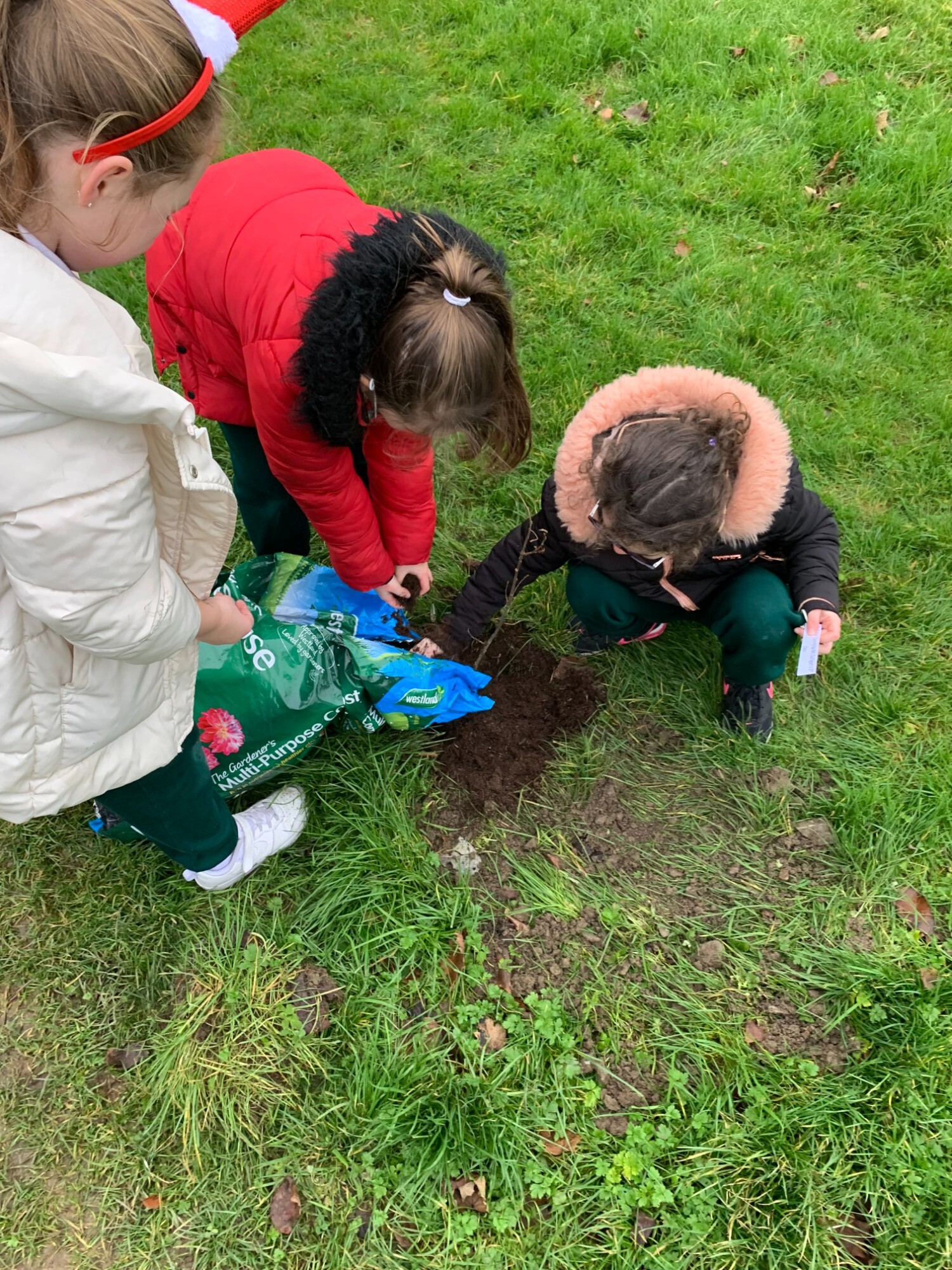
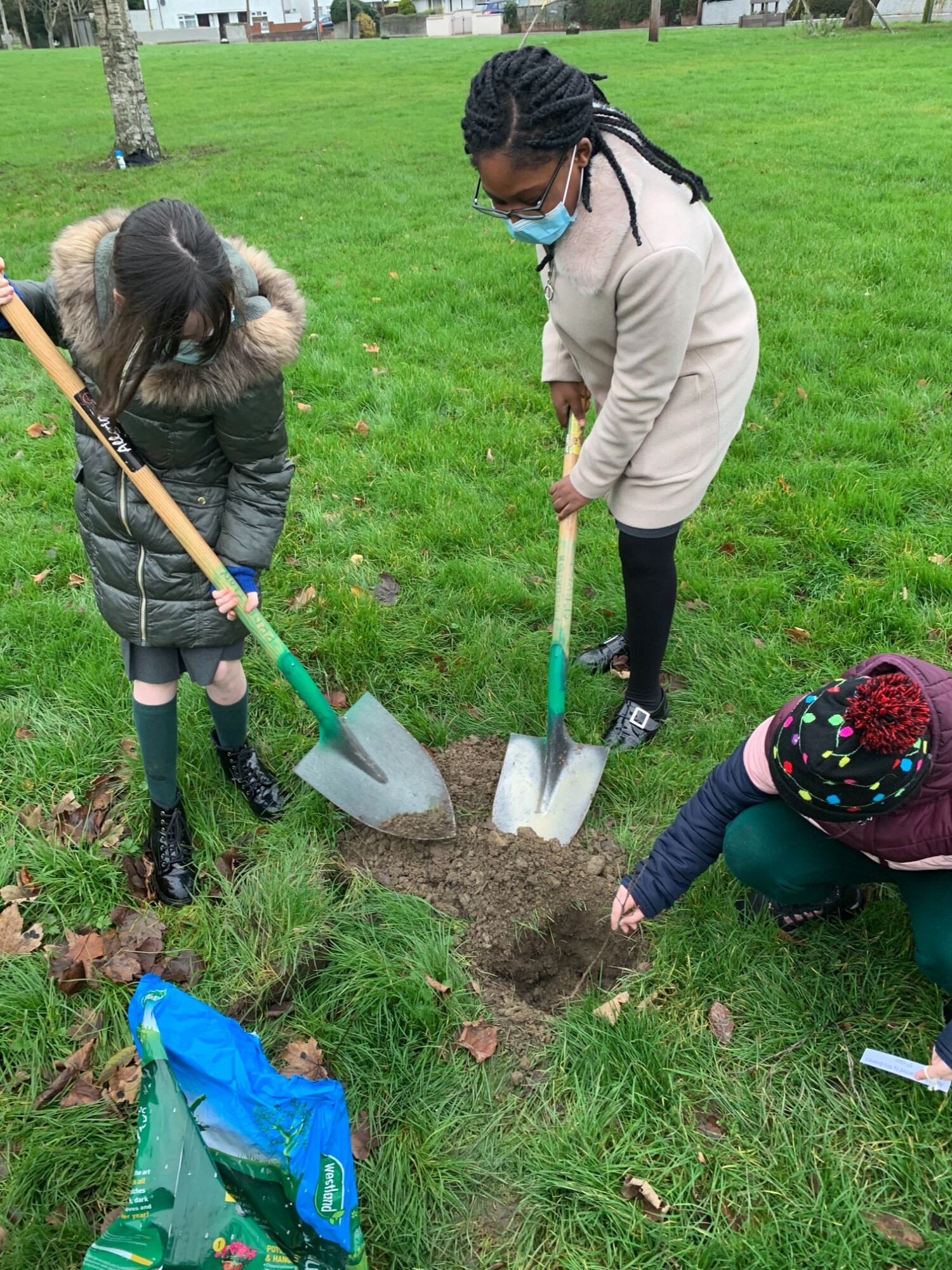
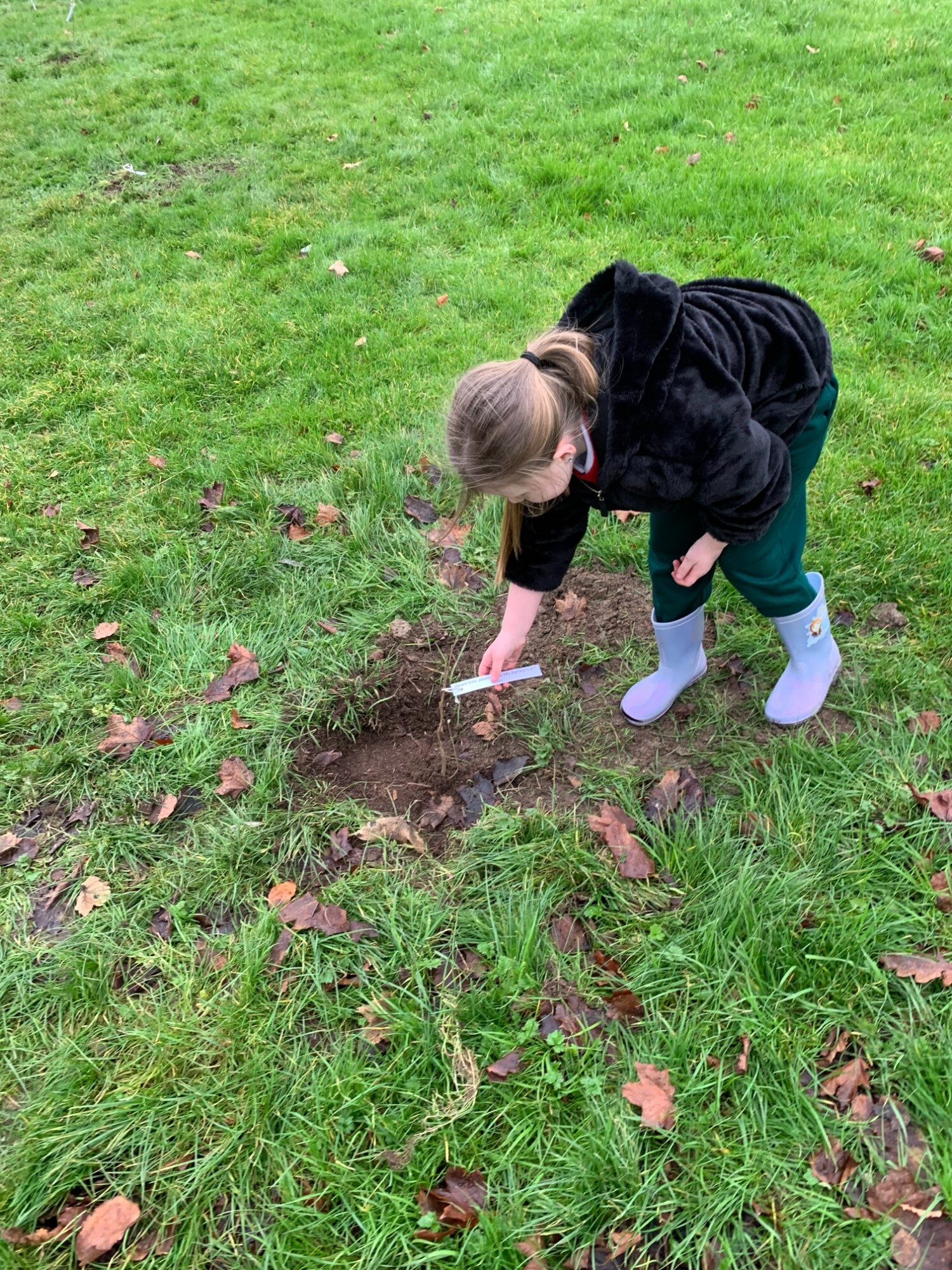
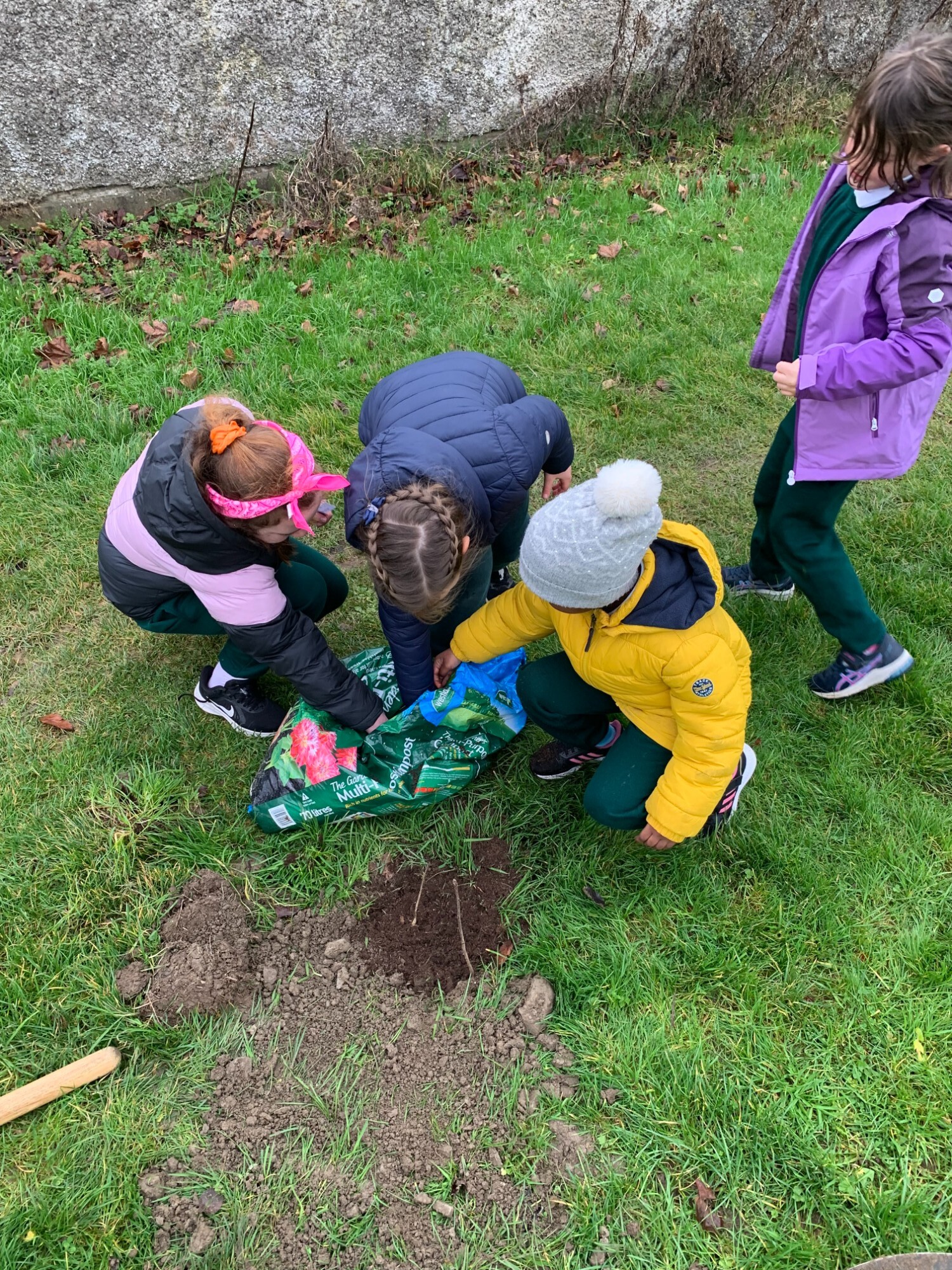
Day of Action: Self Help Africa Project by planting 10 native Irish trees | All classes | December (Y2) | YES |
Set up nesting boxes for birds | Caretaker / Green School Committee | December (Y2) |
|
Set up bird feeders in school garden and surrounding green areas | 5th Classes | December (Y2) | YES |
Create a bug hotel in school garden | 3rd Class | May (Y2) |
|
Plant seeds in trays and school garden | 6th Classes | February / March (Y2) | YES |
Develop a nature trail around the school. | Green School Committee | April (Y2) |
|
Create a wildlife area on school grounds by planting some native flowers that will attract butterflies and bumblebees. | 4th Classes | April (Y2) |
|
Green Code for Biodiversity -
We're Green, We're Clean, We are the FRIARY TEAM, and we are Eco-Friendly Keen (created by Ava Pope in Mrs Murphy's 4th Class).
Biodiversity Green Code competition
After the midterm break in February we ran a competition to see who could come up with a slogan to promote biodiversity in the school. We had numerous entries from each class. The Green School Committee got together and looked through each of the codes and ended up picking their top 7 codes. Each class then had to pick their top 3 codes and Mrs Duffy worked out which was our favourite code overall.
In third place was “If you tidy your town then you deserve a crown” by Dearbhla White in Ms Galligan’s 5th Class.
In second place was “It’s our duty to protect nature’s beauty” by Olivia Kissane in Ms Magill’s 6th Class.
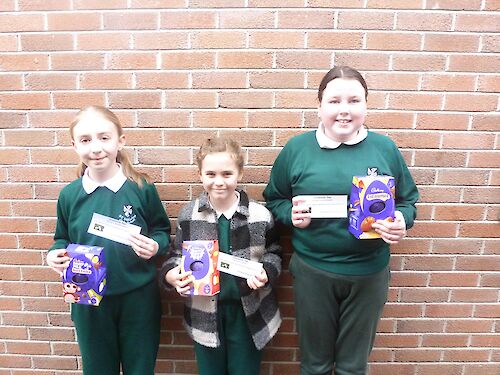
In first place was “ We’re green, we’re clean, we are the Friary Team, and we are eco-friendly keen” by Ava Pope in Mrs Murphy’s 4th Class.
Well done to the 3 girls who received an Easter Egg and Homework Pass. Their photo is shown below:
Biodiversity Events 2021
SPAR National Tree Day 2021 took place on Thursday, 7th October. This year's theme is 'Trees are Good Neighbours' – 'Is comharsana den scoth iad crainn'. Trees provide shelter and food for birds, insects and animals. They also absorb carbon dioxide and release oxygen and help us to fight climate change. So, the top tip to being a good neighbour is to plant more trees!
Ms Magill's' 6th class are going to plant the free sapling we received from SPAR - the Wild Cherry - also known as Prunus avium or Crann Silíní Fiáin. Information about the Wild Cherry can be found on this link: https://youtu.be/eq7HYrNeGJM
Some of our Green School Committee members told tree jokes over the intercom throughout the day. Here's a sample of the jokes we obtained from the treeday website (www.treeday.ie):
Where do squirrels go during the summer? | What did the tree do when the bank closed? |
What did the trees wear to Mother Nature's pool party? | What did the little tree say to the big tree? |
Why can't Christmas trees sew? | What did the autumn leaf say to the tree? |
Why did the pine tree get into trouble? | Why do trees hate tests? |
What type of tree fits in your hand? | Why do trees hate riddles? |
What's a tree's favourite drink? | How do trees access the internet? |
What happens to trees on Valentine's Day? | What do you call a tree with lots of friends? |
What do trees like to study in school? | What did one leaf say to another? |
Why did the leaf go to the doctor? | What was wrong with the tree's car? |
Bird Feeders (9th March 2022)
To help entice more birds to the school Ms Galligan's 5th class created their very own bird feeders. They had lots of fun making the bird feeders and hanging them up around the school in different locations to see what birds they will attract. We will keep you posted of what birds sample the feeders.
AppleGreen's BioDive ( 1st March 2022)
Mrs Murphy's 4th class registered for the AppleGreen BioDive Schools competition to try and win the grand prize of 10000 euro to get a biodiversity garden installed in the school. There are runner-up prizes of 10 Biodiversity workshops and kits. There are currently 124 schools throughout Ireland registered. Each school has to collect 120 stickers by spending 5 euro or more in AppleGreen stores. We were sent a huge poster from AppleGreen to put up in our school. We have about half of the stickers collected now but need your help to get some more. Please ask at the AppleGreen stores for your stickers if you shop there. The competition ends on Thursday, 28th April.
Birds Around Your School - Zoom Lesson with BirdWatch Ireland (9th February 2022)
On Wednesday, 9th February the two 2nd classes, 3rd class and the two 5th classes took part in the Zoom Lesson by BirdWatch Ireland about 'Birds Around Your School'. The speaker was Niall Hatch from BirdWatch Ireland. He spoke about the most commonn species of birds found in our schools, giving tips on how to identify them, what to feed them, how to care for then and fun facts about the birds.
Bulb Planting ( 15th December 2021)
Ms Magill organised for the junior classes (2nd, 3rd and 4th) to plant bulbs in flower pots. The classes had a choice of daffodils, tulips or hyacinths. Before Christmas each of the classes planted their bulbs and are looking forward to seeing how the bulbs grow coming into spring.
Virtual Bogs in the Classroom (16th November 2021)
The three fourth classes took part in the Virtual Bogs in the Classroom two-part workshop about bogs. The first part entailed watching a pre-recorded video presentation on Youtube in the classroom. This introduced the classes to peatlands, how they were formed, the plants and animals that live there and bog archaeology. Each class were given instructions on how to make a bog plant dial.
The second part of the workshop involved taking part in a live call from the facilitator Paula via Zoom, where the pupils had a chance to ask questions, explore the topic of freshwater invertebrates, play a guessing game about bog plants and animals and answer quiz questions. The classes got the opportunity to use the bog plant dials they had made.
Investigate Woodlands Workshop (8th November 2021)
Miss Magill's sixth class and Miss Galligan's third class took part in the 'Investigate Woodlands' workshop. The children learnt lots about different trees that are found naturally in Ireland. The girls learnt about how trees grow and looked at the different ways that seeds can be dispersed. The girls also got to plant acorns in the hope that they will turn into Oak trees. The girls will look after the trees for the coming months and will watch them grow!
National Tree Day Nature Walks (20th October 2021)
Many classes have gone on nature walks to Ice House Hill as part of National Tree Day in October. October is a great time of year to go into the forest to admire the changing colours of leaves and see the different fruit from trees, like the horse chestnut. Here at the Friary we are very lucky to have a great forest walk at our doorstep with many oak, sycamore, ash, willow and horse chestnut trees to see. Here are some photos from the 2nd and 4th classes on their nature walk to Ice House Hill. Check out the grey squirrel that 4th class spotted looking for some nuts.
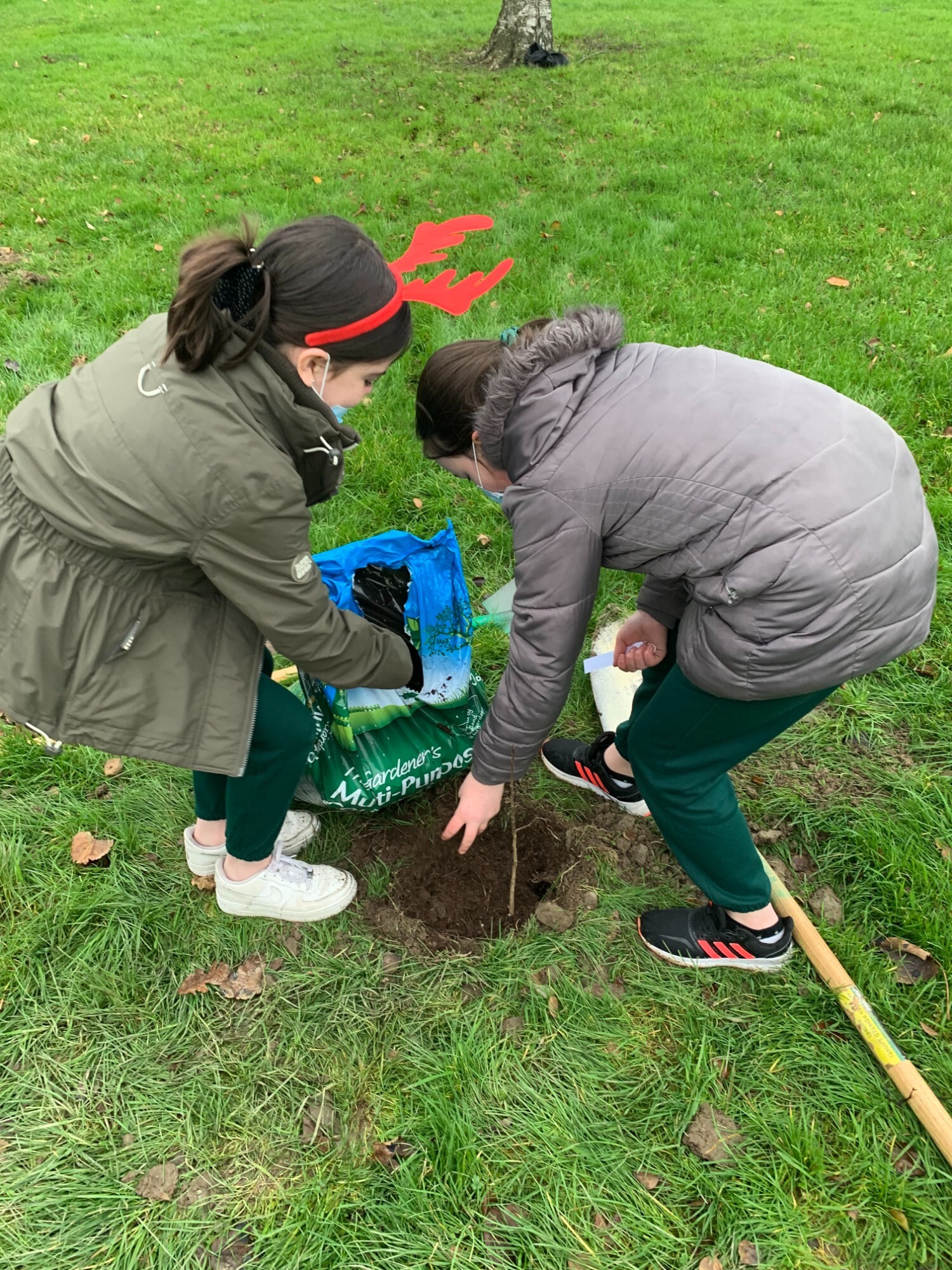
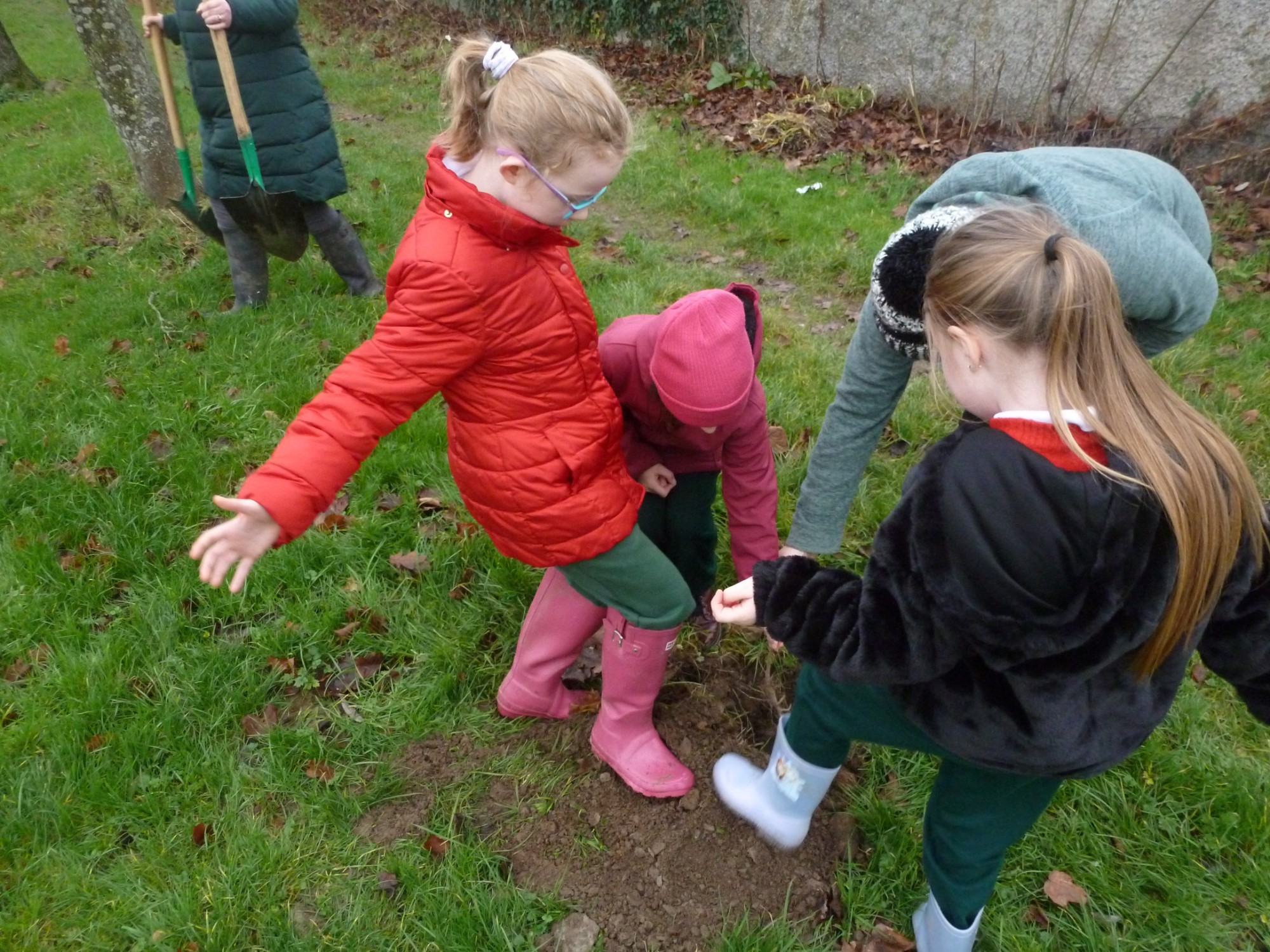
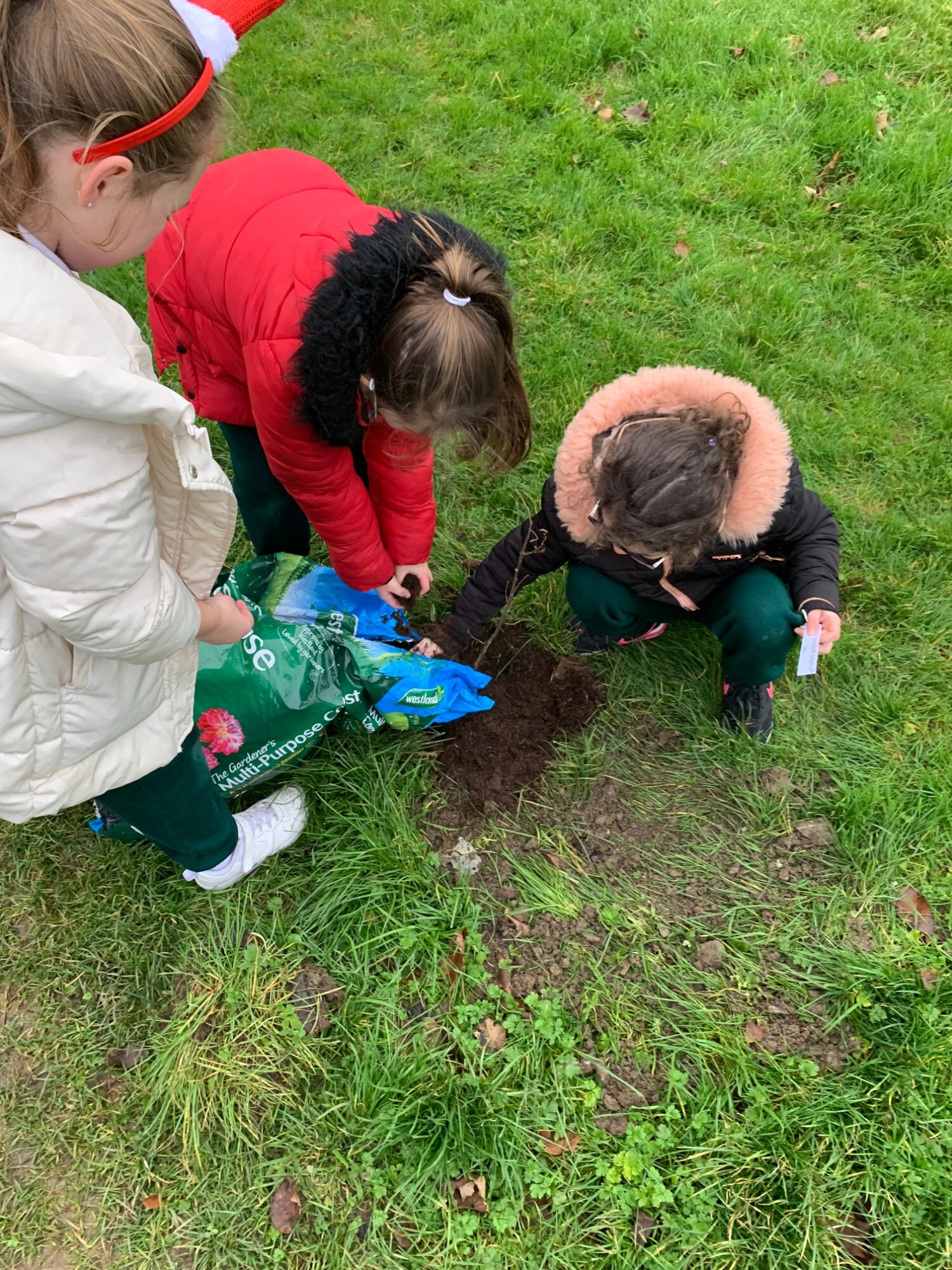
Day of Action - Self Help Africa Project Planting Trees (17th December 2021)
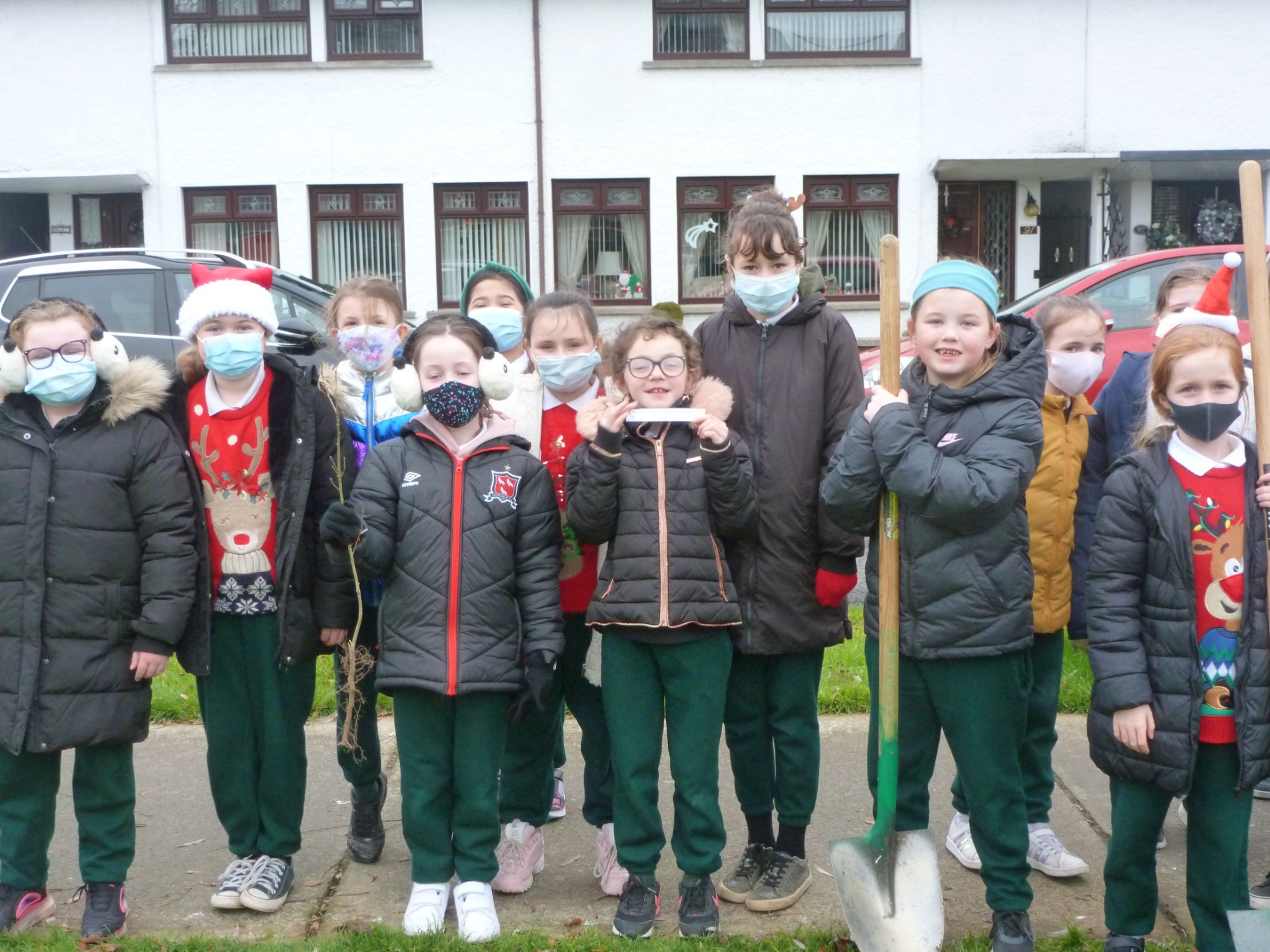
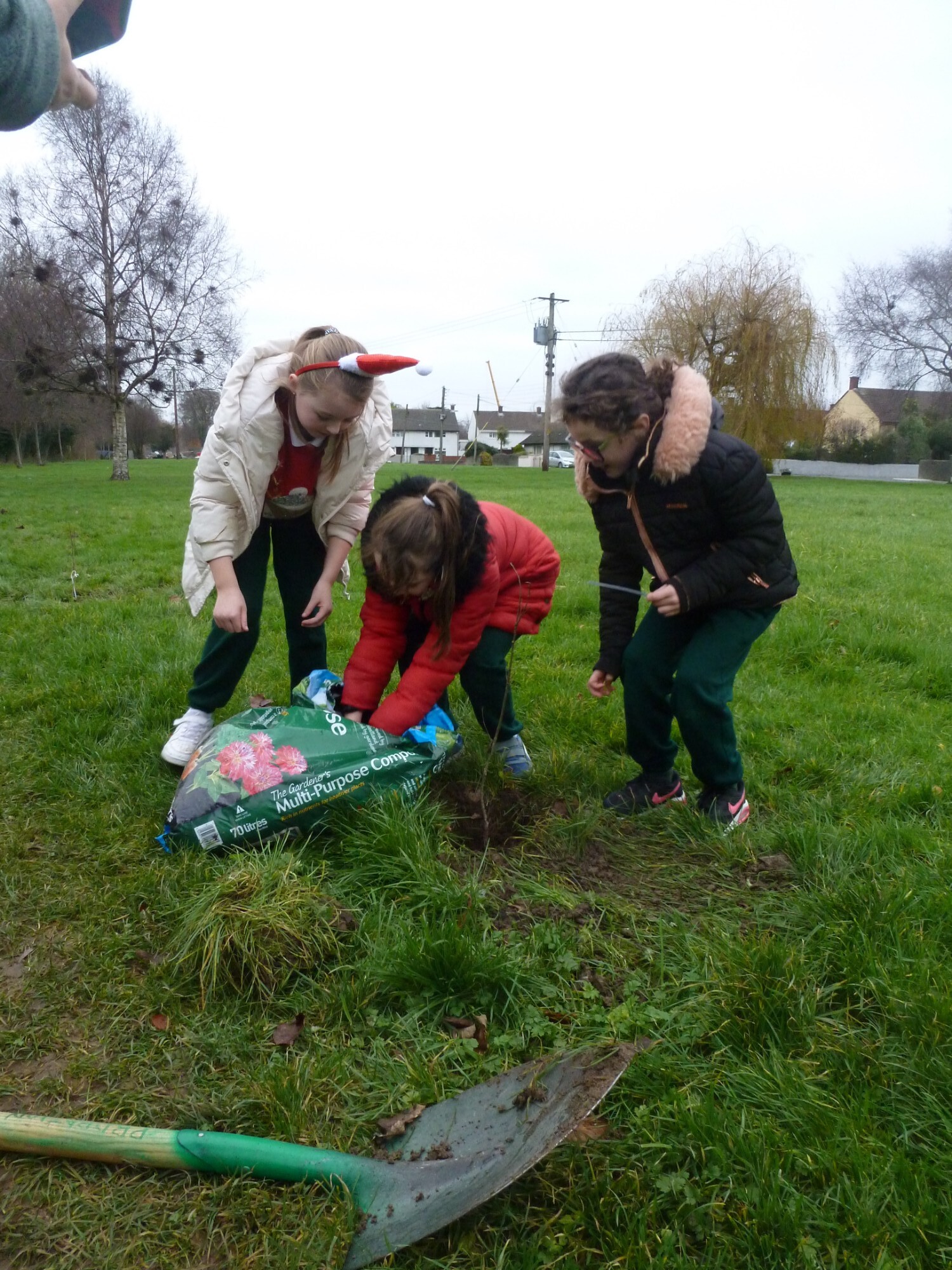
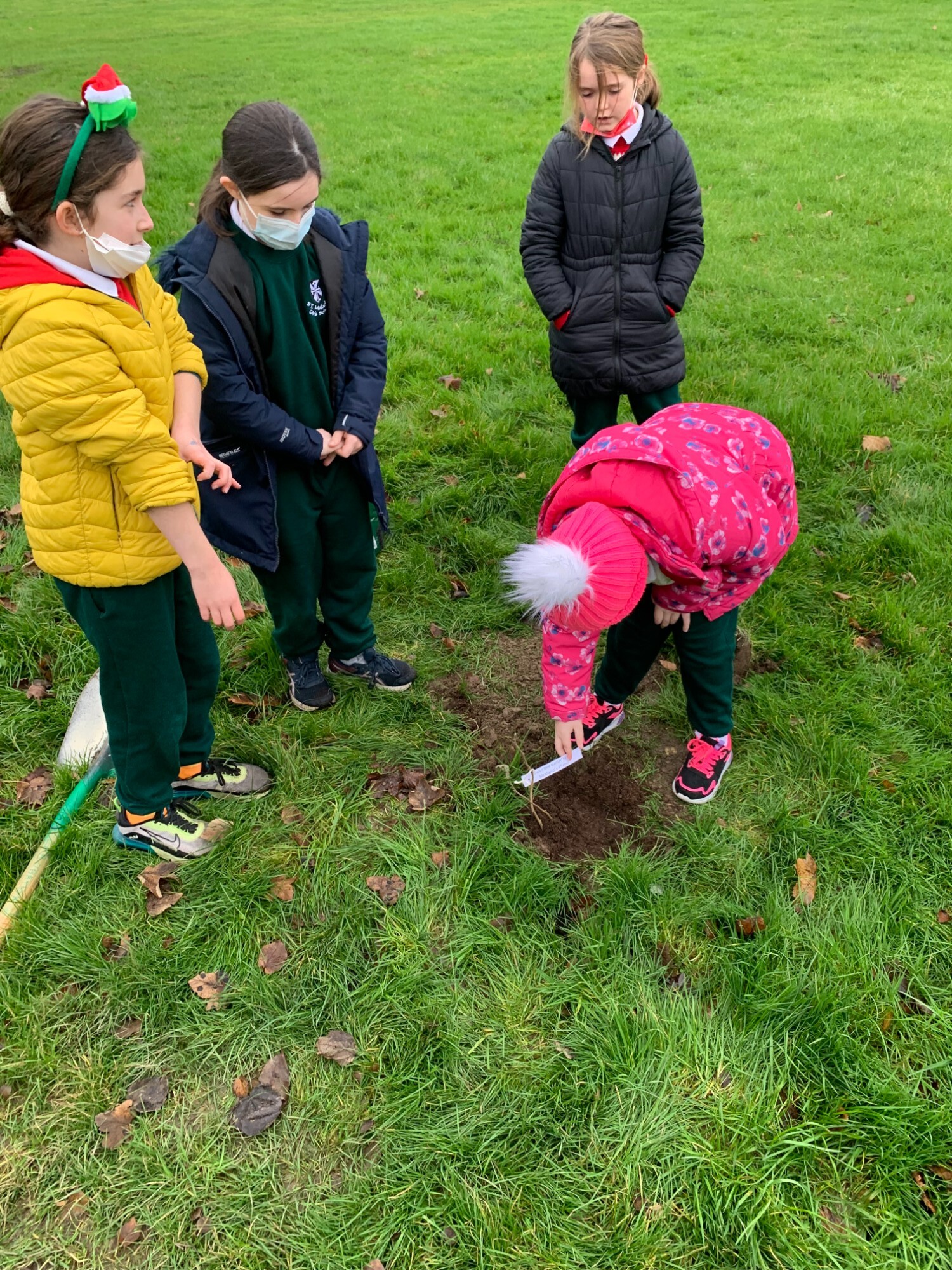
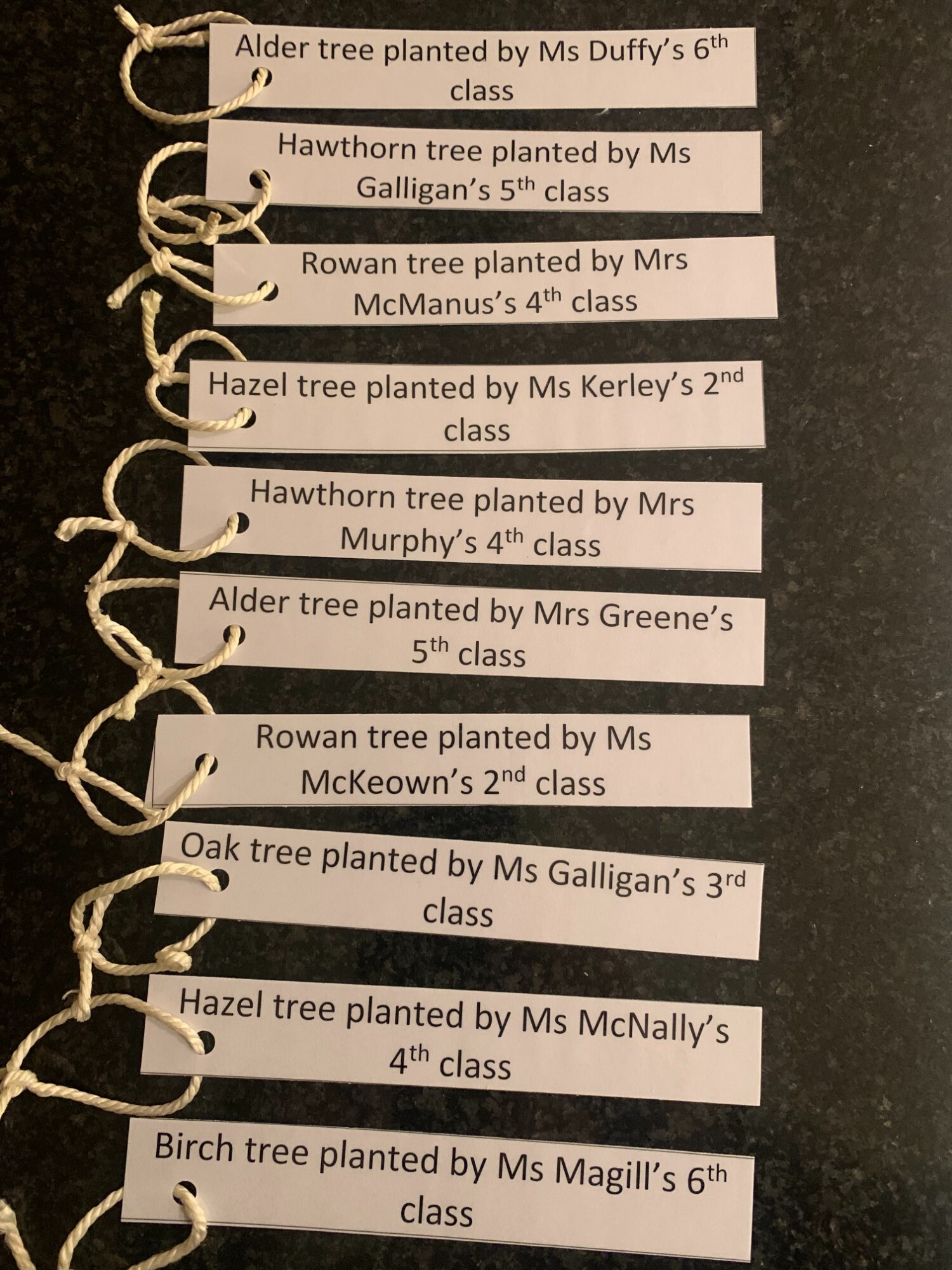
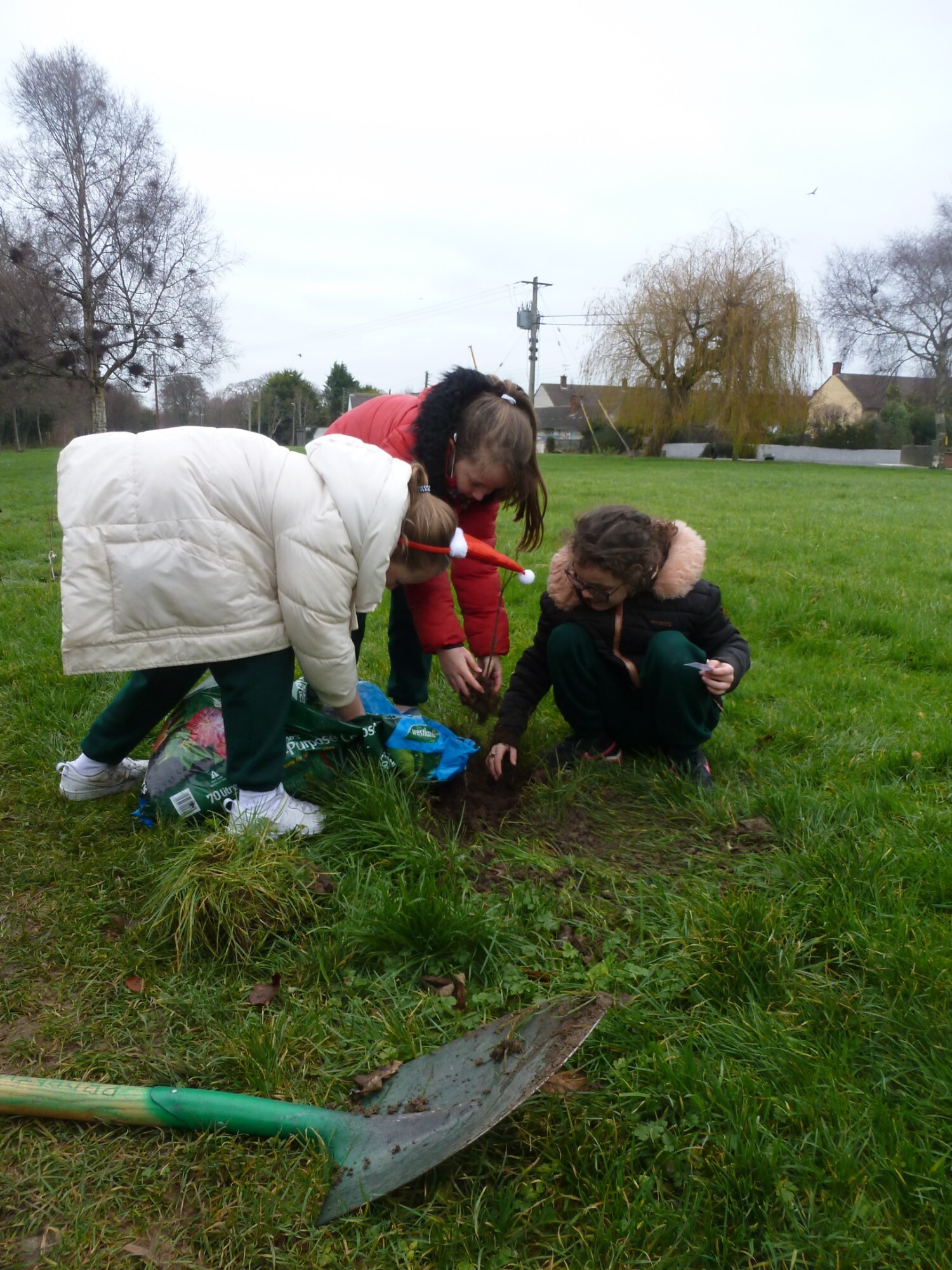
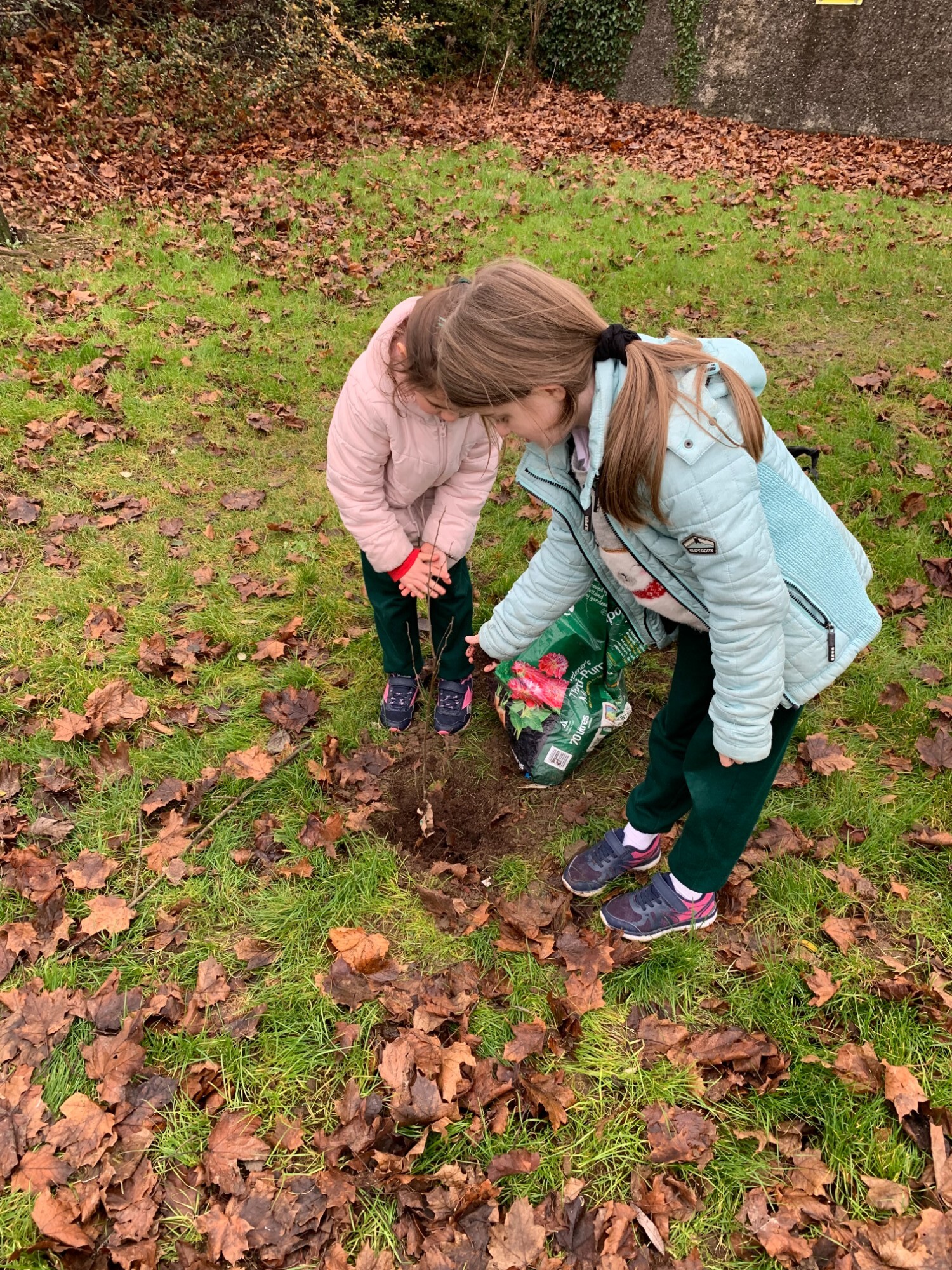
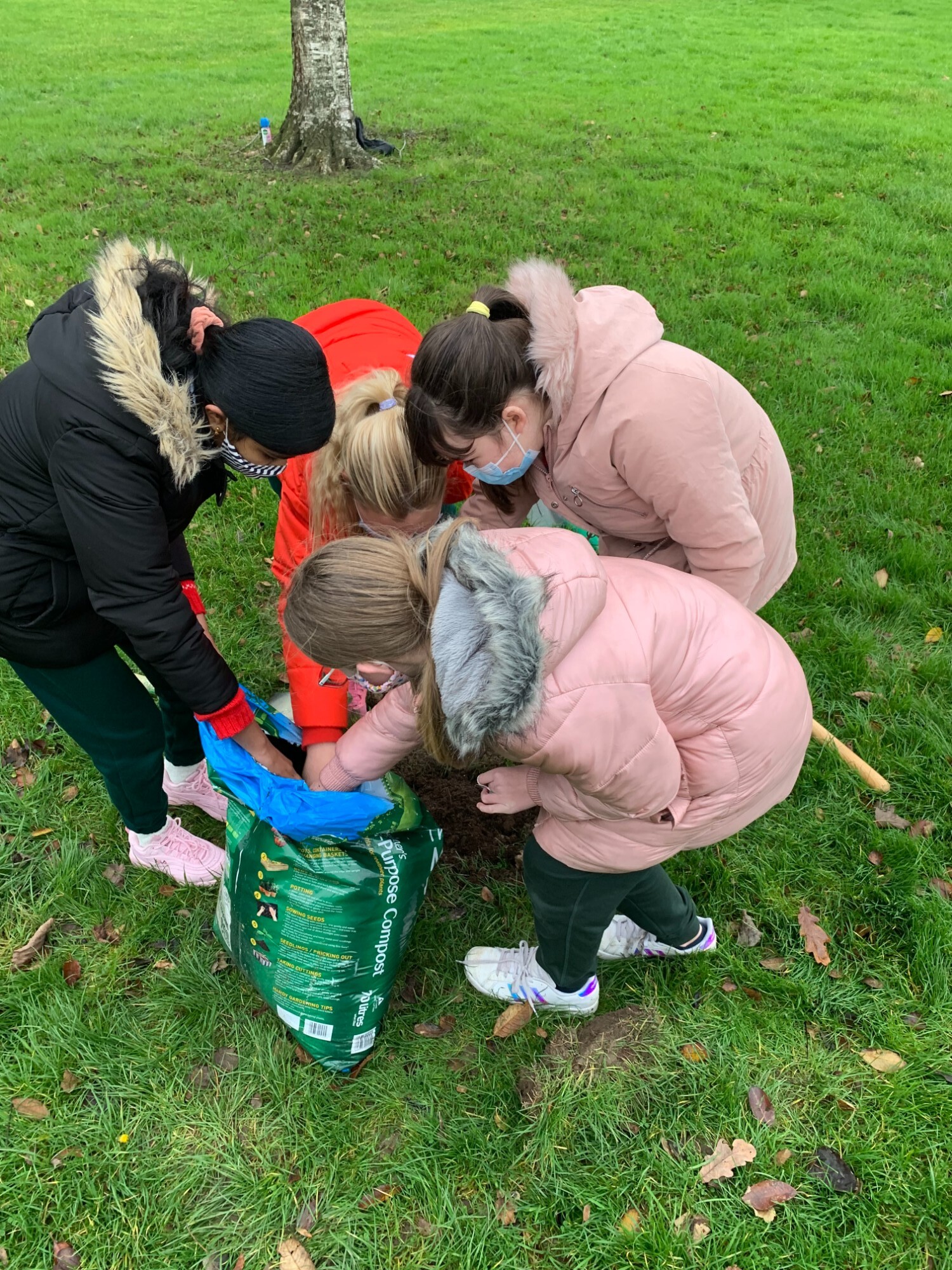
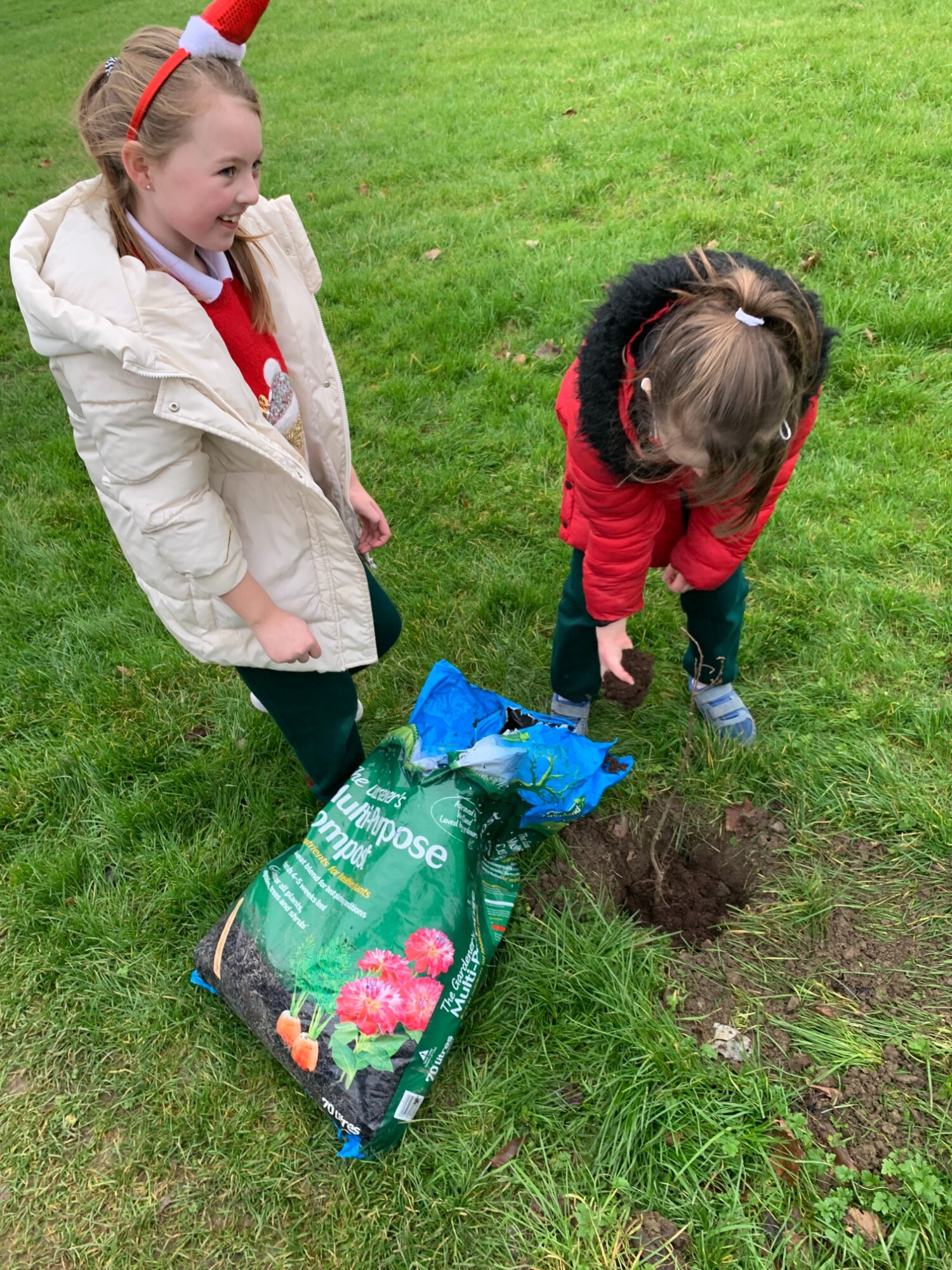
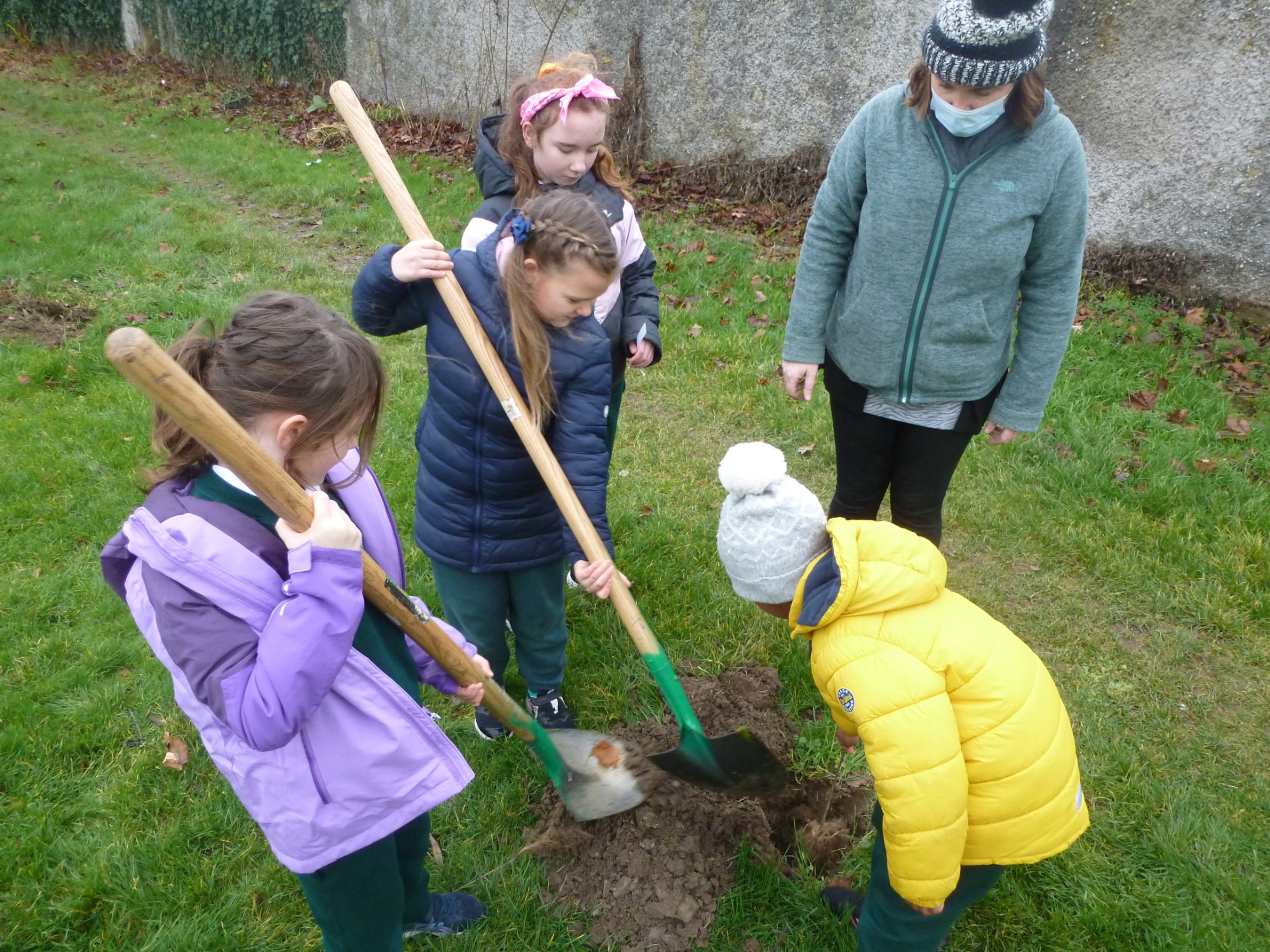
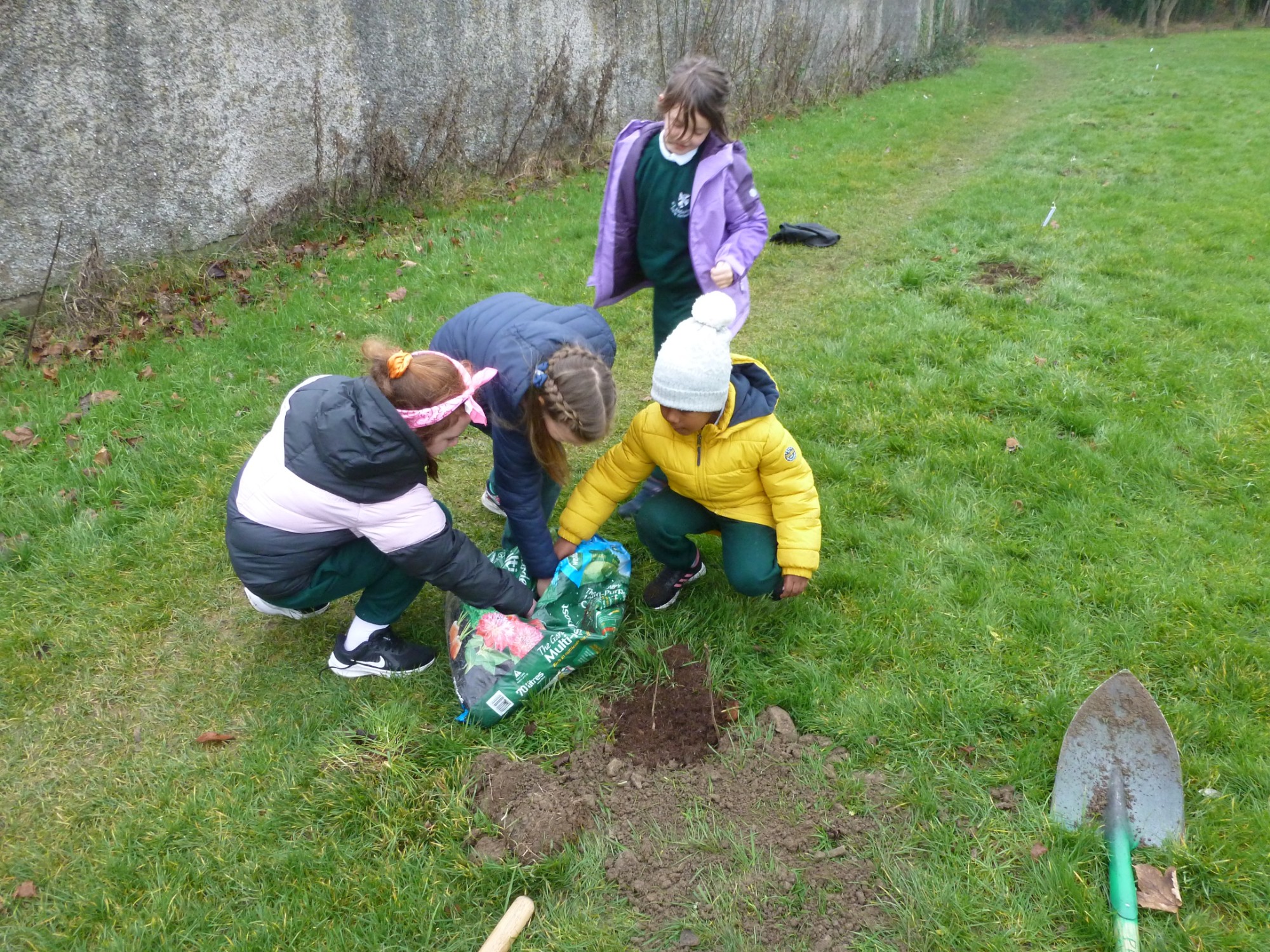
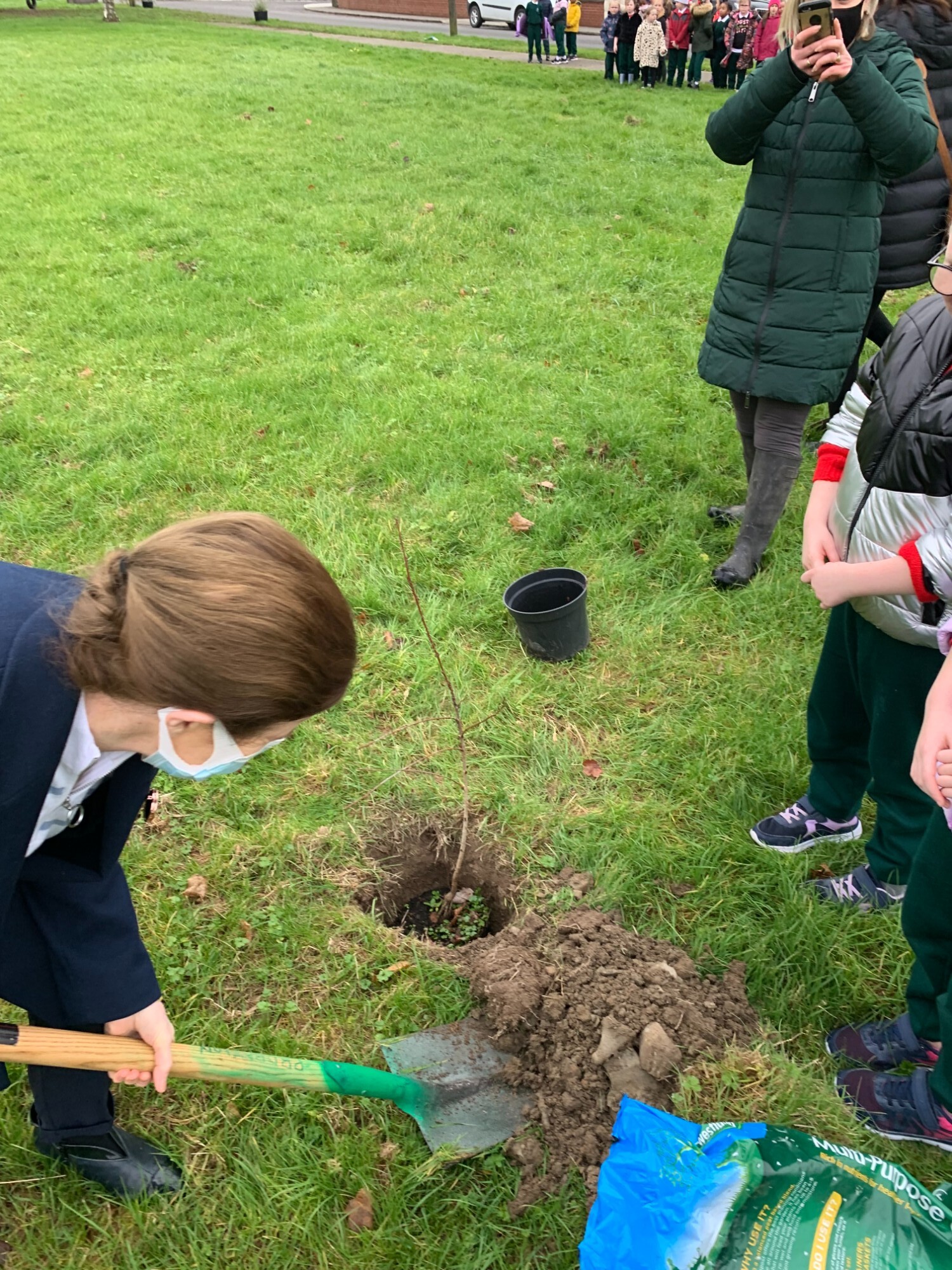
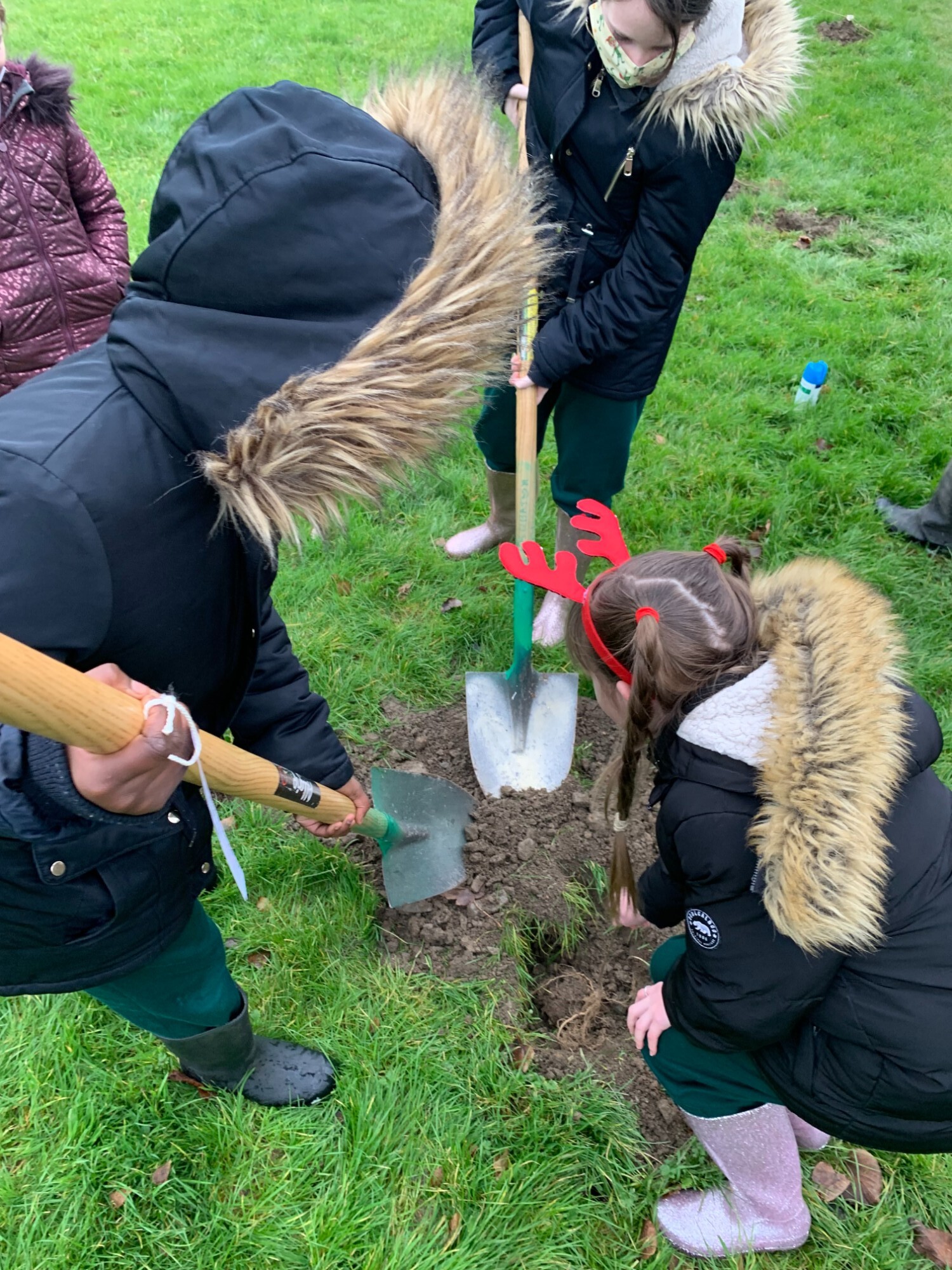
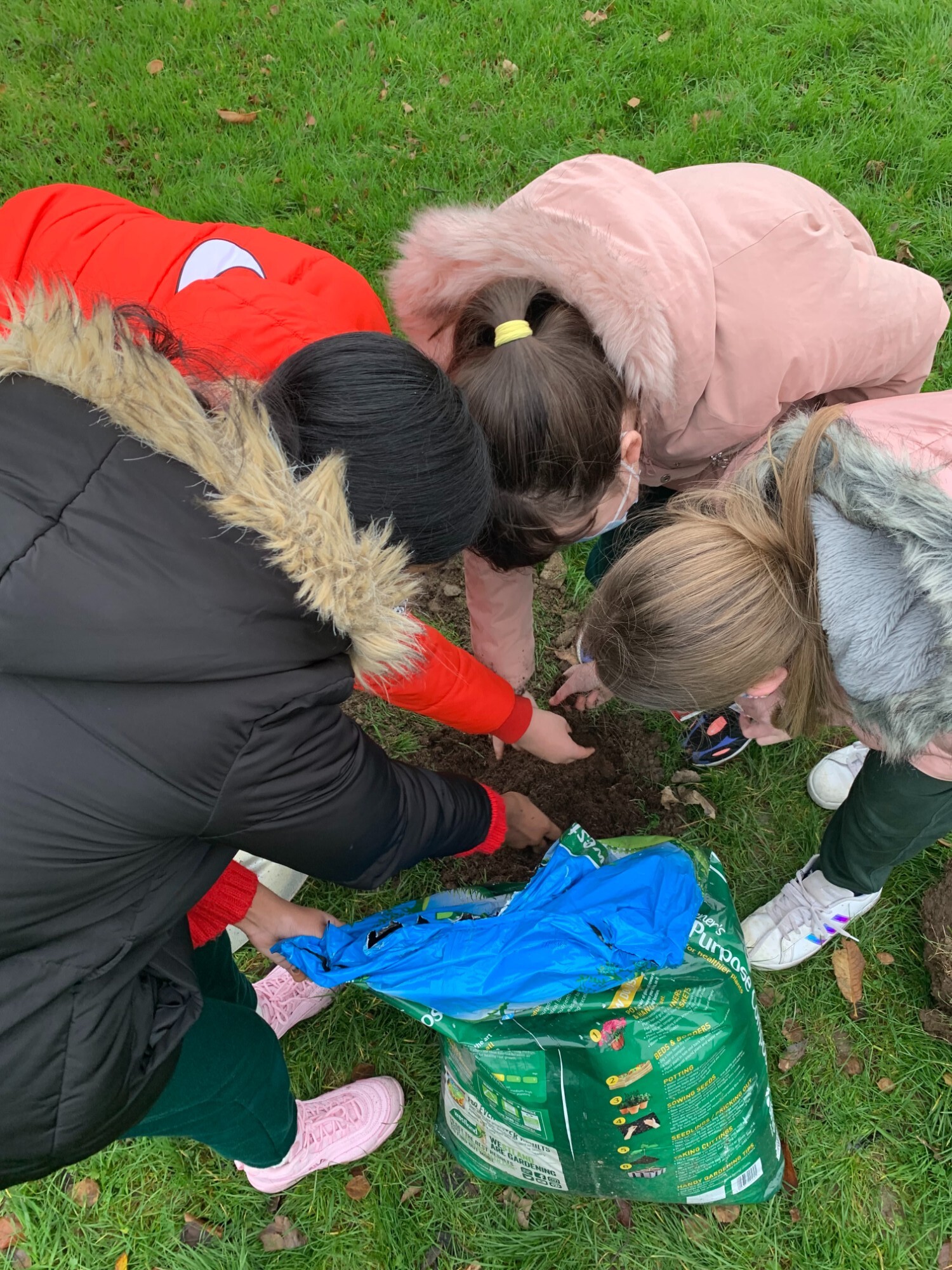
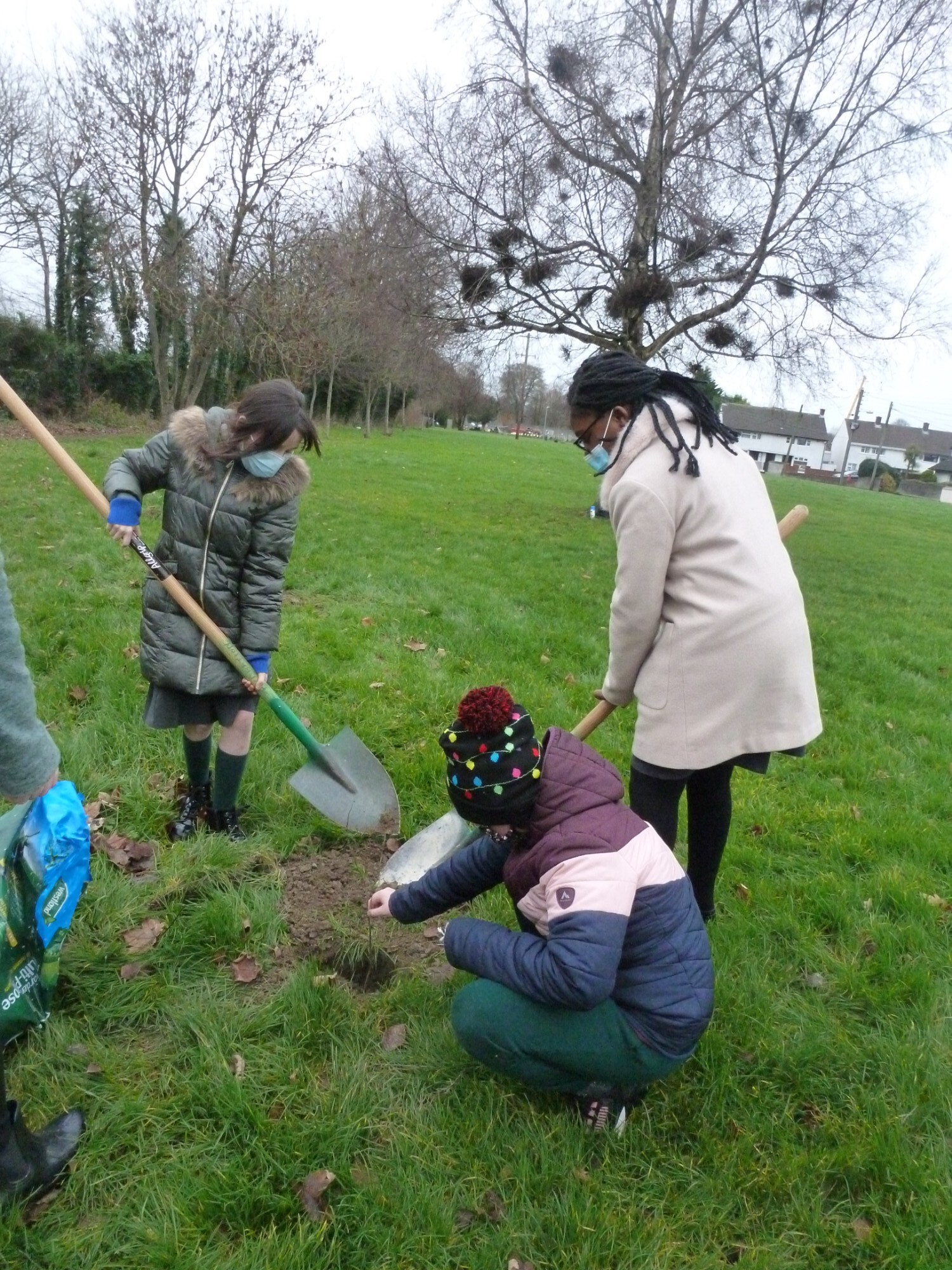
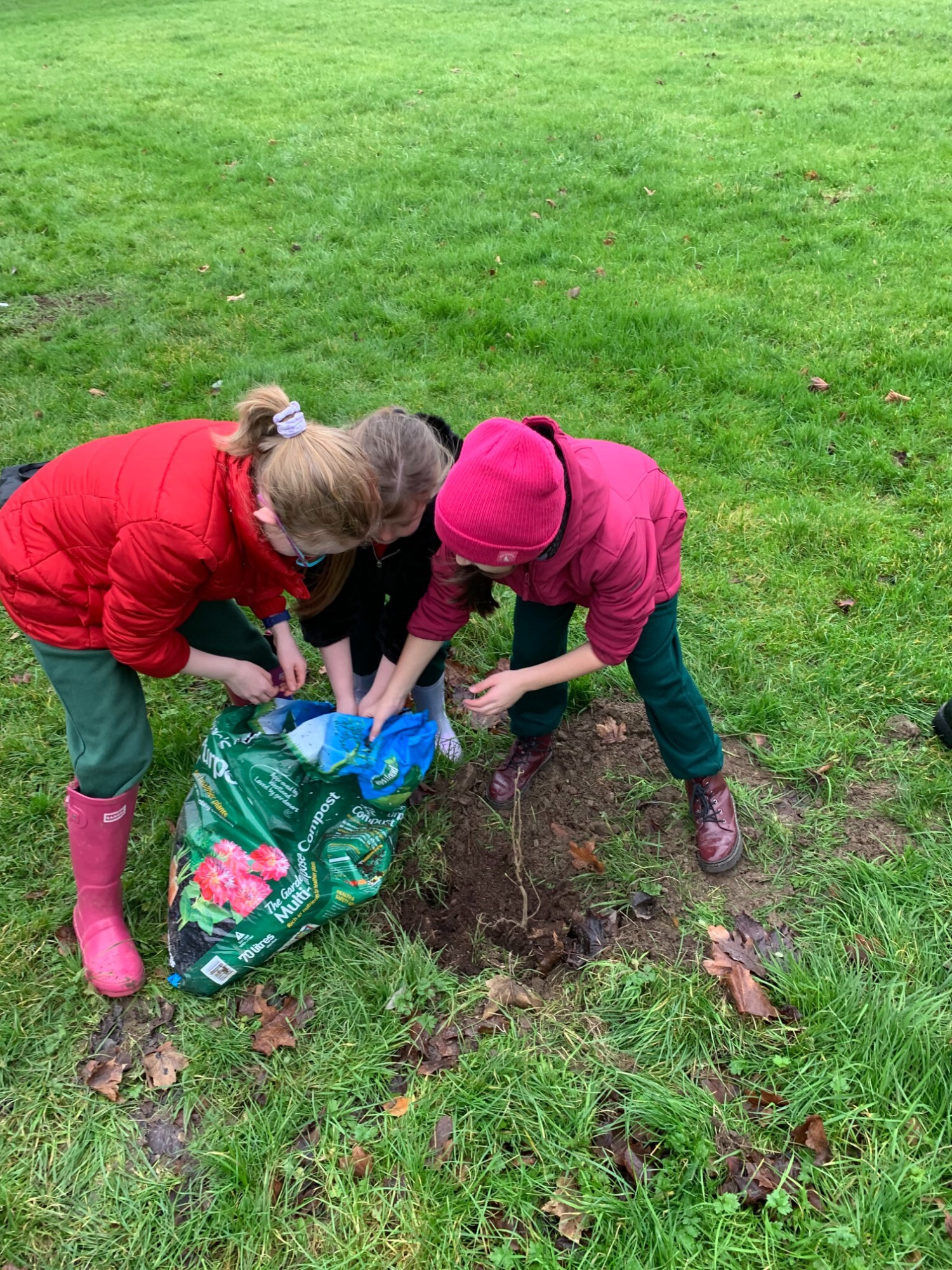
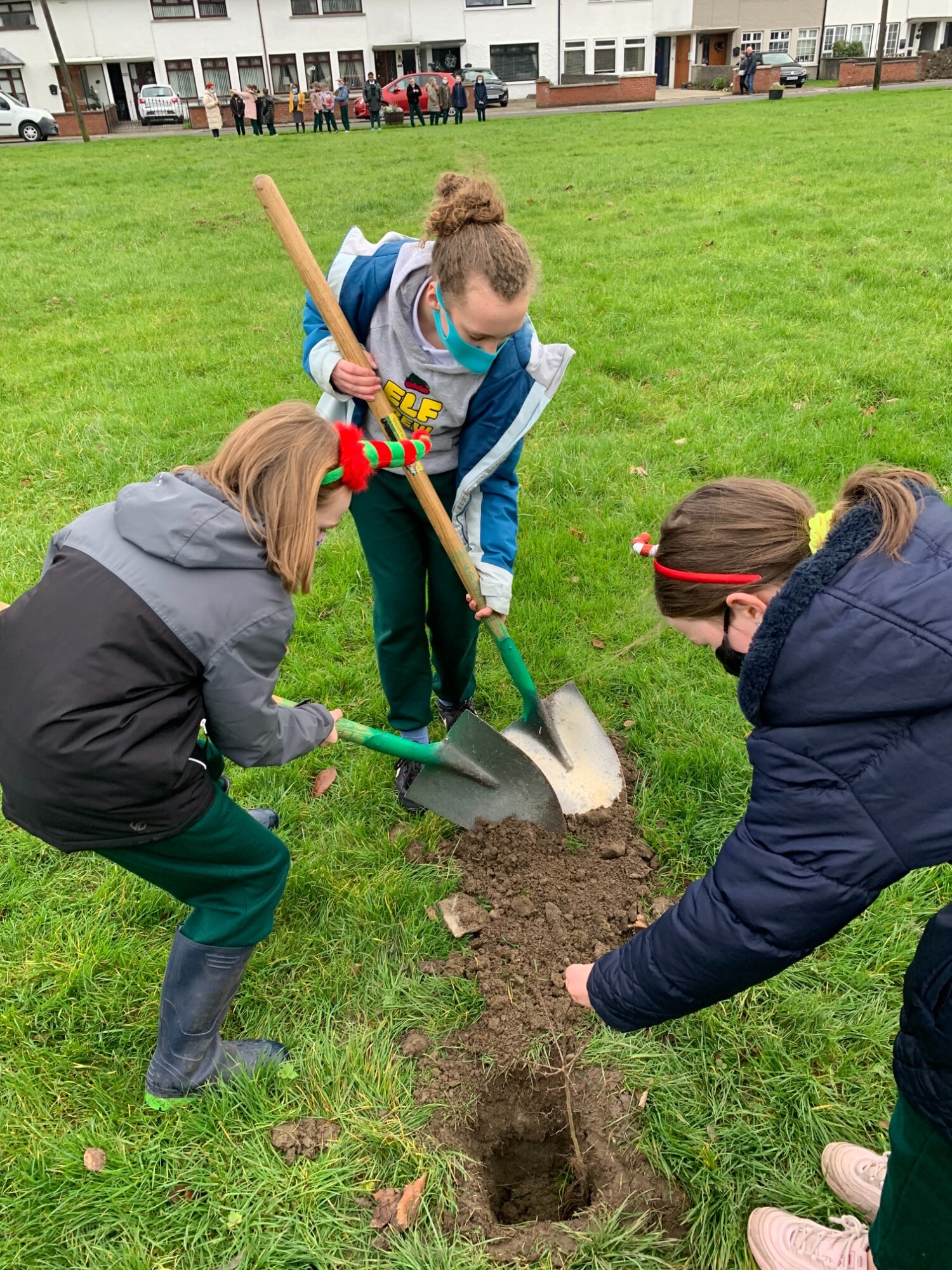
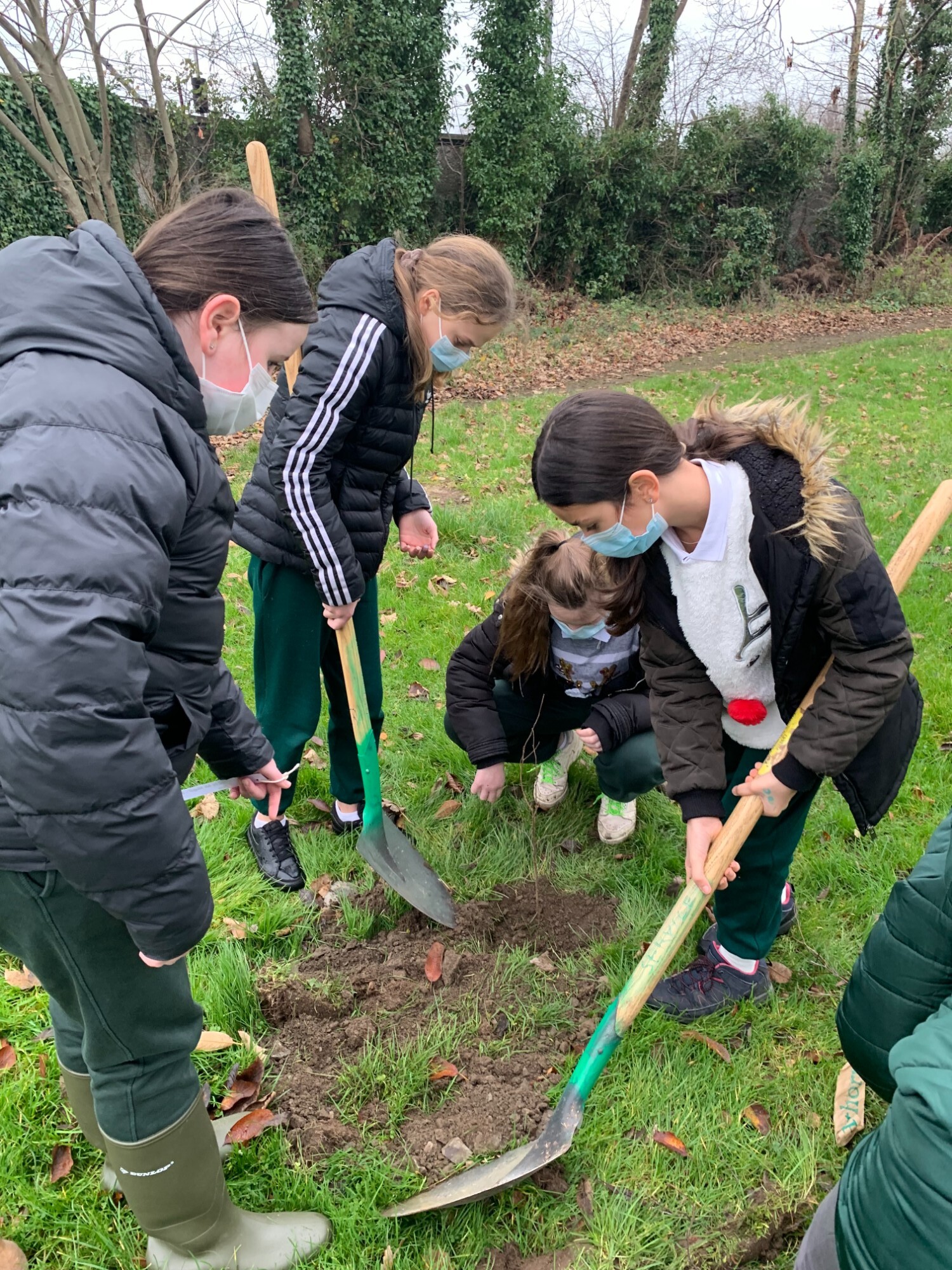
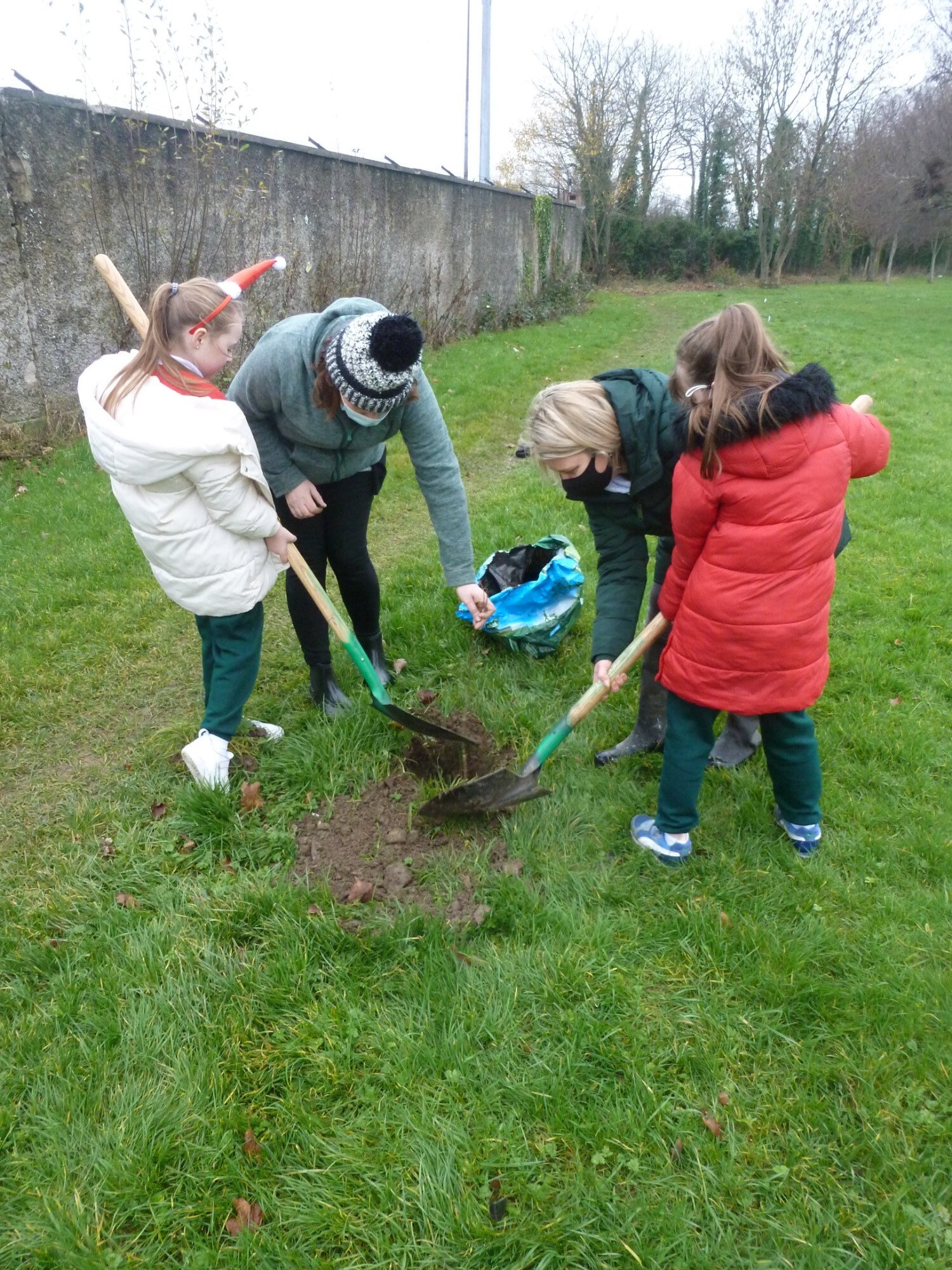
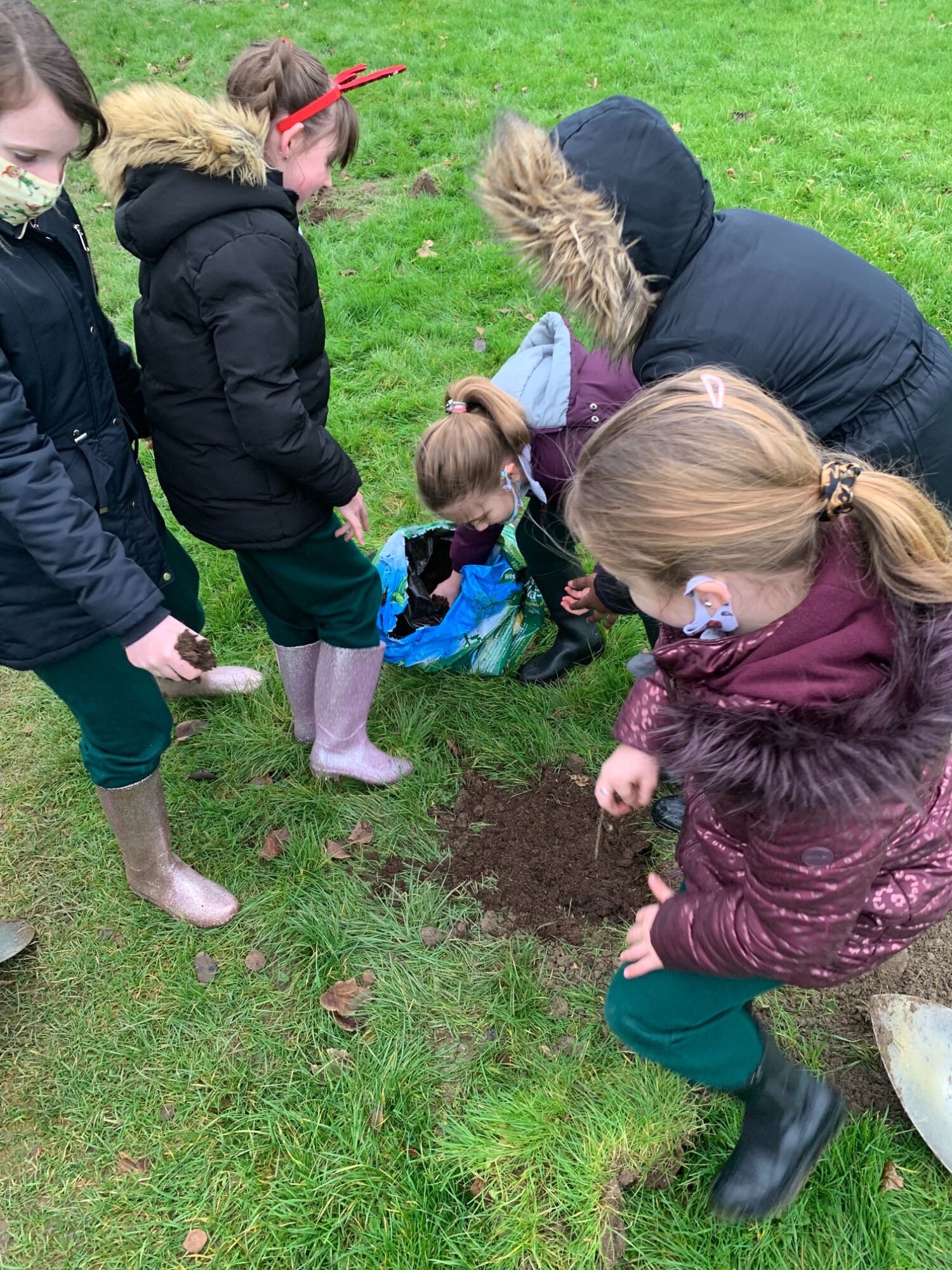
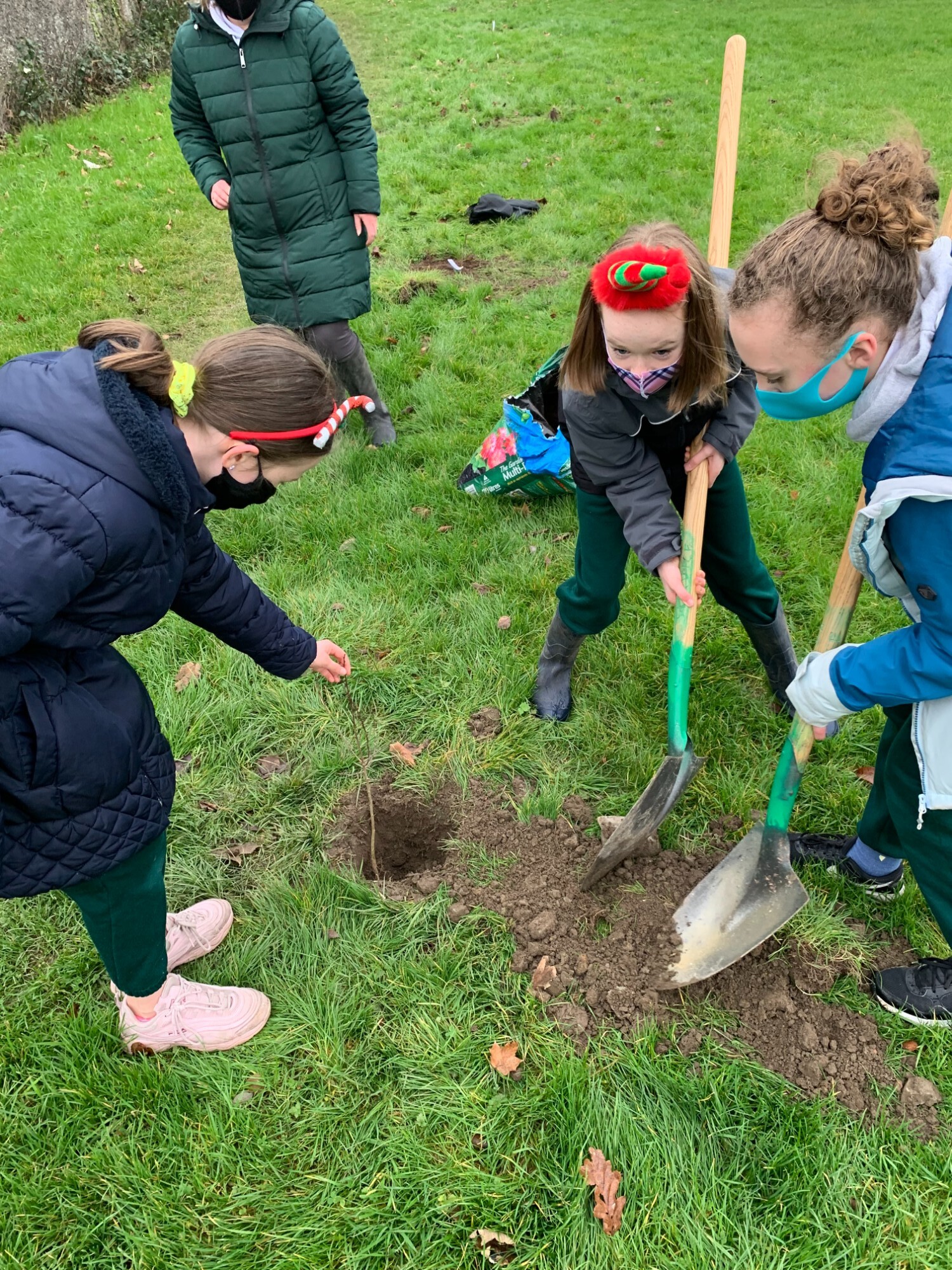
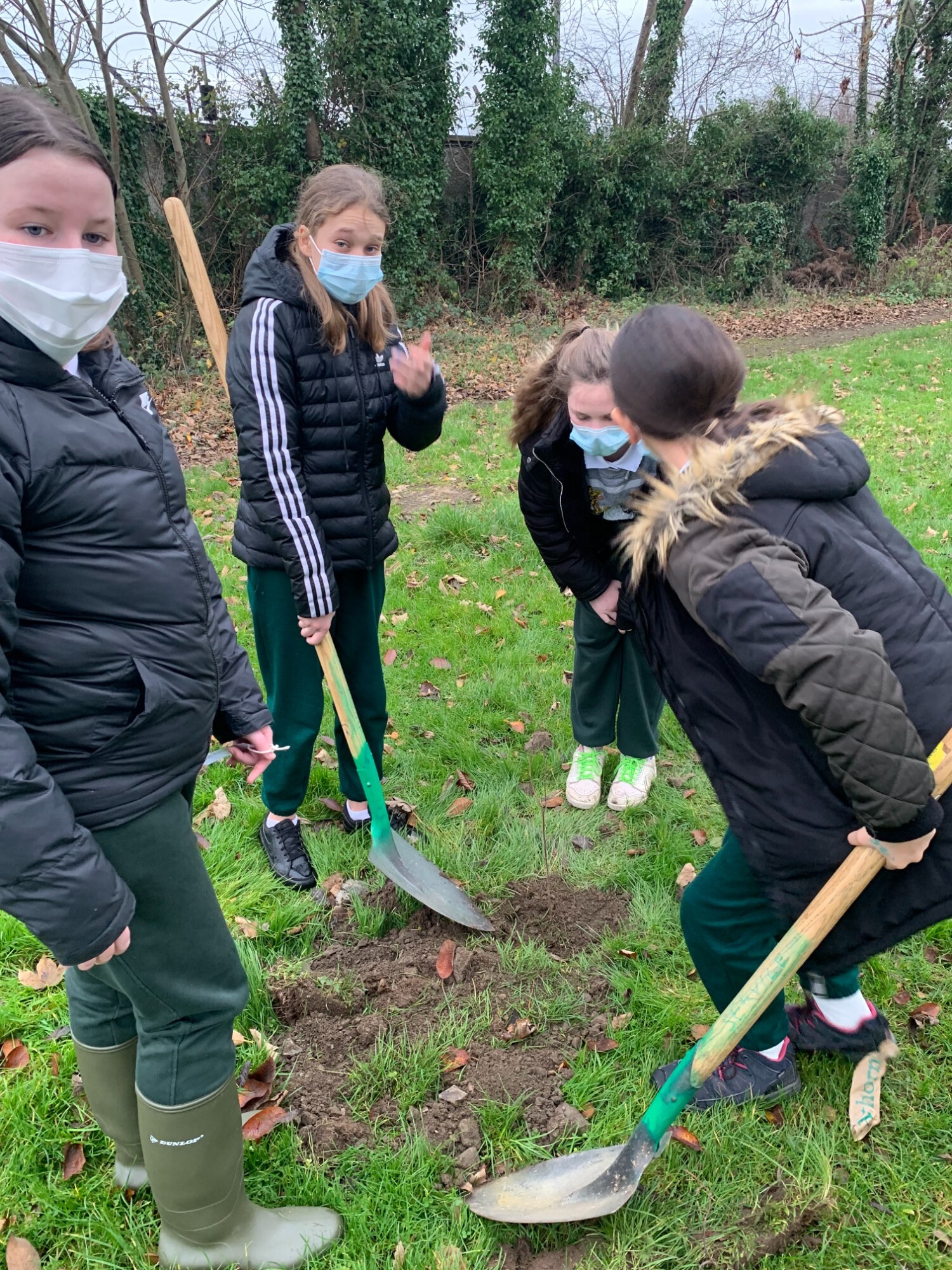
Our Day of Action for the Biodiversity Flag was on Friday, 17th December. For our Day of Action we applied to the Self Help Africa project for a native Irish tree to plant for each class. This project is aiming to help tackle climate change by planting one million trees globally. For every native tree planted Self Help Africa will plant 10 more trees in Africa and provide us with the geo-location of where they are planted so we can look up our trees on Google Earth.
The types of trees planted by each class were hazel, hawthorn, rowan, birch, alder and oak. Each class will look up information about their tree in the new term and we'll present it here on the website.
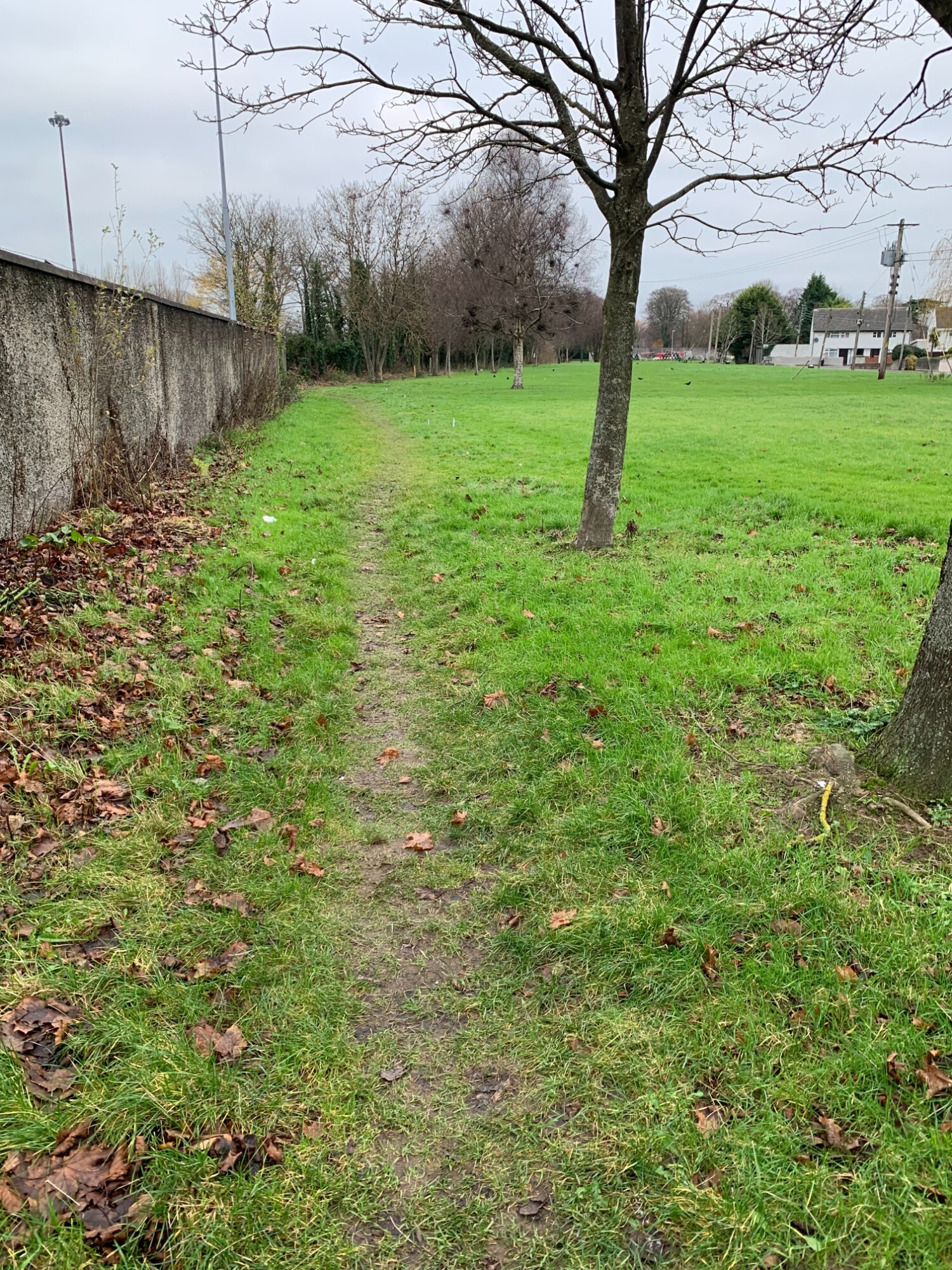
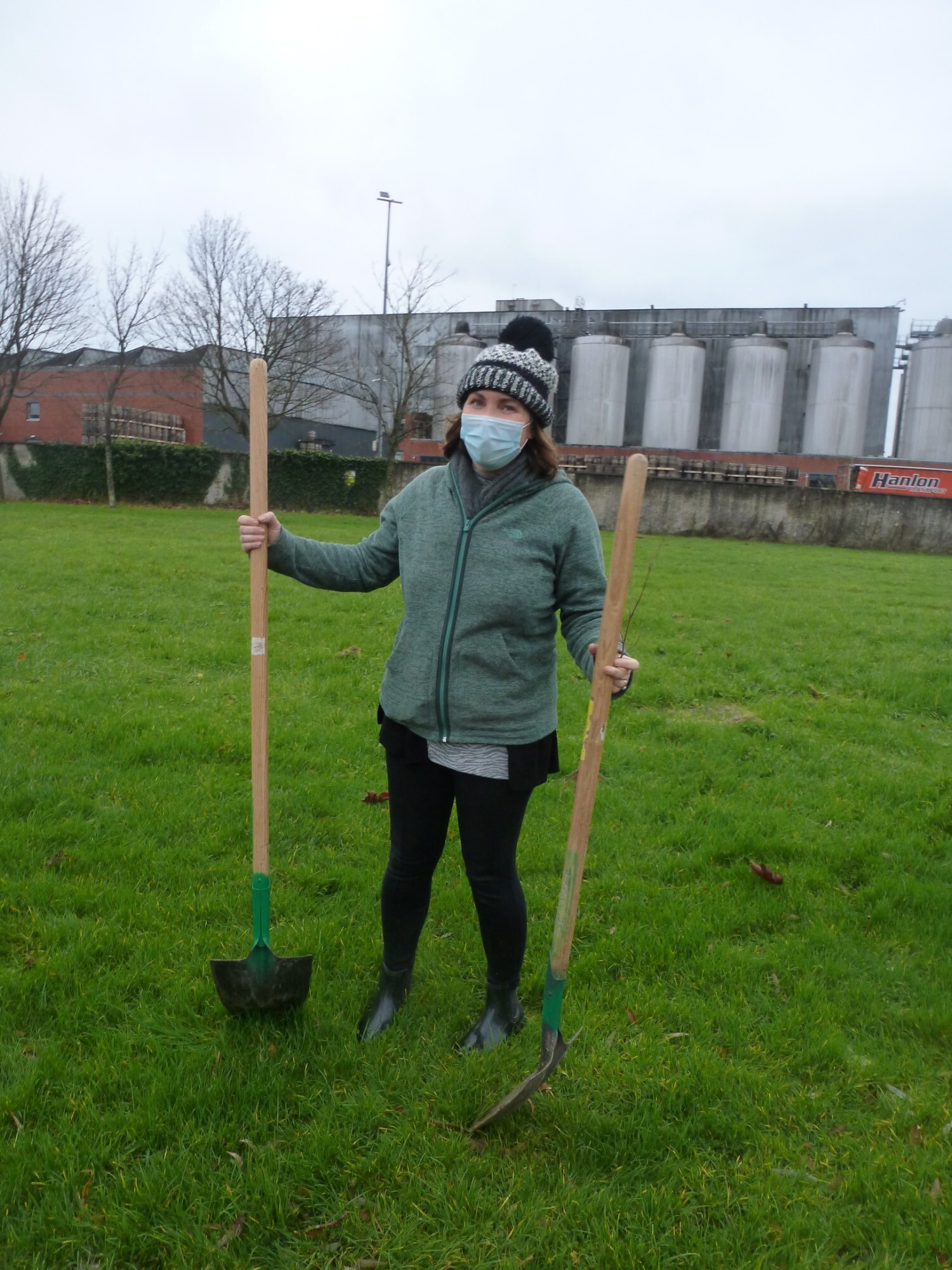
As space to plant trees in our school is limited we asked The Pearse Park Residents Committee if they’d be interested in planting the trees with us. They agreed to let us plant the trees in the green areas in Pearse Park and dug out holes beforehand for us. All the photos from our Day of Action are available to see under the Biodiversity Heading.
Here are some photos from our Day: